On January 17th, 2006, after students were back, Scott Cowen held a meeting with the engineering students to explain the Renewal Plan.
The entire meeting, IMHO, was to blow smoke up our ass and not run away with our tuition dollars ($40K/year at that point). Tulane had already pissed off a lot of parents by keeping the Fall 2005 tuition money.
The meeting ticked off the engineering students quite a bit. Fortunately, some of us recorded it and caught a real gem from Cowen that pretty much sums up his fuckmookishness:
"Question: 20 years from now, 30 years from now you will remember you came to Tulane. You're not going to remember what you major was or ... [garbled] ... but you will remember Tulane University."
-Scott Cowen
January 17th 2006
Meeting with engineering students
That's the quote, word for word (23 minutes in on Side B). Told to a bunch of ENGINEERING students. It doesn't matter what, say a Civil engineer learns in school, it only matters that they went to Tulane.
Unfortunately, the quality on the tapes is terrible. Cowen's booming voice is the only thing that the mic picked up.
Side A:
Side B:
If anyone would like to give a stab at cleaning up the audio, that would be greatly appreciated.
NOTE: Some minor edits. Also, the noladishu.blogspot.com version of this post has embedded audio players that don't seem to show up in Google Reader.
Saturday, April 10, 2010



Emerald Coast Food
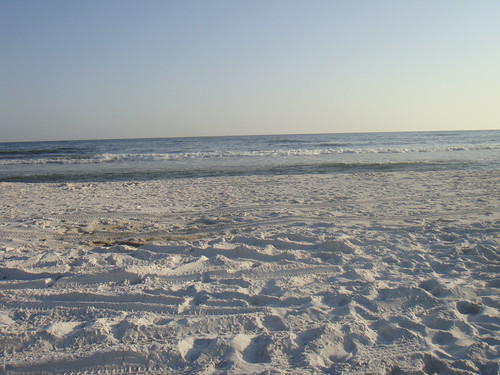
Candice and I enjoy vacations to the Emerald Coast in Florida. One of the problems we encounter every time is where to eat. Most of the restaurants there are, frankly, terrible. I know I'm spoiled because of New Orleans, but the restaurants are over-priced, poor service and the food just sucks. What makes it so inexcusable is the abundance of incredibly high quality ingredients. They have vegetables from Georgia, citrus from Florida, and seafood from the Gulf of Mexico and the Atlantic isn't too far away, either. The measure of most restaurants in the area is now how good they are, it's how little to they screw up the top-quality ingredients.

Fortunately, in the land of mediocre restaurants, there is one redeeming one: The Red Bar. From what I understand, it's one of the oldest restaurants in the area and was founded by a Belgian guy (who made sure the bar kept Stella Artois on tap!). They serve breakfast; the waffles are wonderful with house-made whipped cream, strawberries, and powdered sugar. They also are just the only place along the coast that knows how to cook vegetables. There are only about 6 or so main items on the menu at dinner time, but by keeping it simple, they don't screw it up and they're amazingly consistent. The Red Bar is the only place I'd recommend to another New Orleanian in the area without reservation. The prices are good, the service is excellent, and the food is great. I'll give it my highest compliment: it could survive as a pure restaurant in New Orleans, even without the beachside locale.
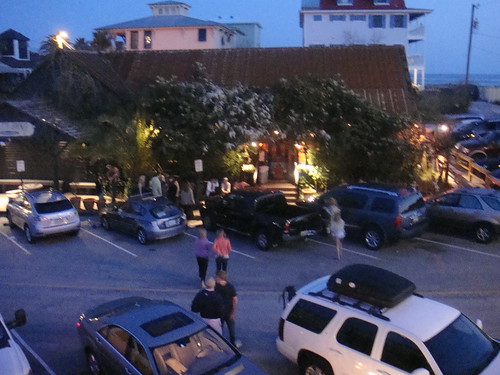
The only drawback is if you don't eat dinner there early, it gets really jammed up with an incredibly long line.
There is also one alternative to The Red Bar: get the great ingredients and cook it yourself. The groceries there are pretty good and cheap.
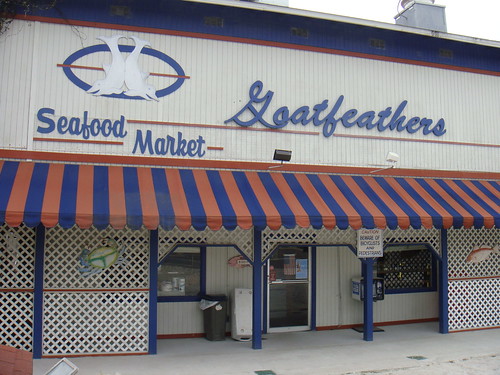
Goatfeathers in Blue Mountain is the seafood supplier to most of the restaurants in the area. The grouper-type fish are local and very fresh. You can generally get something in the afternoon that was swimming in the morning. Try this recipe, for one.
Thursday, April 8, 2010
Sunday, April 4, 2010
Dump Cowen, Not Engineering
Today the Times-Picayune gave their Loving Cup award to Scott Cowen. I'll grant that Cowen has done some good things with the Cowen Institute and New Orleans Public Schools and keeping the doors open at Tulane, one of the largest private employers in the city.
But, even the article mentions the shuttering of engineering at Newcomb. There's no getting around the fact that in the aftermath of the the Federal Flood, the largest engineering disaster in US history, Cowen axed the programs that could have made the most difference. In his own words, "If they don't fix the levees, everything we've done [with the Renewal Plan] is for naught."* What are we going to do Dr. Cowen? Sue our way to Category 5 Levees?
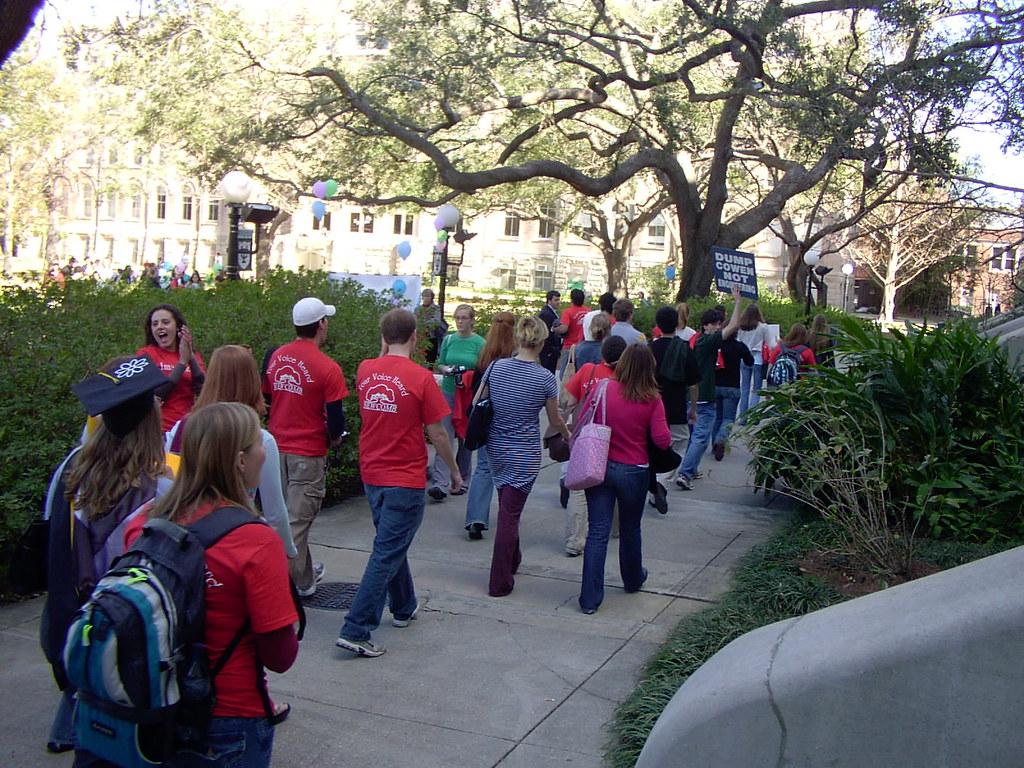
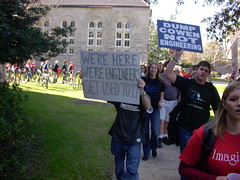
In early 2006, there was a huge student protest on campus. Hundreds (thousand plus?) of students marched around the administration building. They demanded Cowen's resignation over the Newcomb and engineering cuts. Not a single news organization covered it. I'm posting a couple of photos to prove that it did indeed exist.
__________
* Citation coming.
Update- More:

"Football players build great levees"**
____________
** Tulane's football program, despite as favorable accounting as they can possibly manage, runs a deficit of at least $2 million a year. It was not effected by the "Renewal Plan."
UPDATE 2- From Tulane's last E-Week battlebot competition:
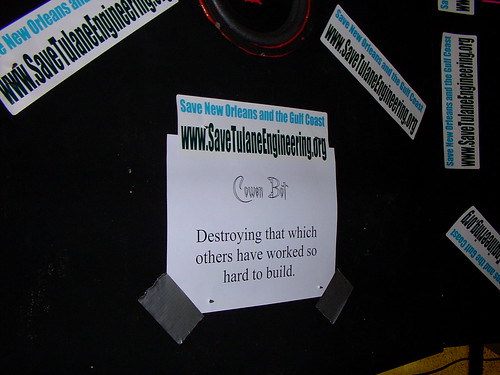
"Cowen Bot: Destroying that which others have worked so hard to build"
But, even the article mentions the shuttering of engineering at Newcomb. There's no getting around the fact that in the aftermath of the the Federal Flood, the largest engineering disaster in US history, Cowen axed the programs that could have made the most difference. In his own words, "If they don't fix the levees, everything we've done [with the Renewal Plan] is for naught."* What are we going to do Dr. Cowen? Sue our way to Category 5 Levees?
In early 2006, there was a huge student protest on campus. Hundreds (thousand plus?) of students marched around the administration building. They demanded Cowen's resignation over the Newcomb and engineering cuts. Not a single news organization covered it. I'm posting a couple of photos to prove that it did indeed exist.
__________
* Citation coming.
Update- More:
"Football players build great levees"**
____________
** Tulane's football program, despite as favorable accounting as they can possibly manage, runs a deficit of at least $2 million a year. It was not effected by the "Renewal Plan."
UPDATE 2- From Tulane's last E-Week battlebot competition:
"Cowen Bot: Destroying that which others have worked so hard to build"
Thursday, April 1, 2010
The Offshore Imperative
We've been hanging out on the beach in Florida and I've been reading a history of the offshore oil industry (nice timing, Mr. Obama). One of them, The Offshore Imperative, has struck me as the best history of the domestic oil industry I've ever read. Usually, the histories are either blatantly pro-industry, glossing over all drawbacks, or have serious omissions (no M. King Hubbert in The Prize).
The Offshore Imperative is a history of Shell Oil Company, the American subsidiary of Royal Dutch Shell. The title comes from the fact that Shell Oil, in order to meet its reserve replacement requirements, had to go offshore to find oil. All of the onshore oilfields were either taken, depleted, or required political connections that a foreign company could never hope to attain (for example, LA Block 340 that Huey Long's Win or Lose Oil Company sold to Texaco). It used its advantages in geophysics, geology, and engineering to its advantage. Dollar for dollar, nobody beat Shell at the offshore game.
Normally, I flip through the acknowledgments and just ignore it, but this one I read through and I discovered this book had some interesting history. One of the last presidents of Shell USA commissioned the book to be a corporate history of the entire company, including refining, marketing, etc. The author begged to do a history of just the offshore work, but the president said no. The author got his funding went through the Shell internal archives and interviewed all sorts of retirees and was progressing with the book when Shell got hit with a string of reorganizations and the Shell Reserves Scandal. The president that hired him went away and his replacement ignored the book project, demoting the book project to the purview of the PR department, who seized it as a chance to put out a glorified press release. Eventually, the author was told that Shell didn't want the history anymore and he was released from his contract. The author used all his research to put together the history of the offshore industry he always wanted and the run-around he got from Shell management served the book extremely well, in my opinion. He got a lesson in the dark side of the oil business that gave the book a better balance and perspective (but I don't think that anyone will be confused and think the Greenpeace wrote the book).
What grabbed my attention immediately was the first sentence talked about how M. King Hubbert, a Shell geologist, predicted in the 1950's that US oil production would peak in 1970 and go into terminal decline from there. He was widely scoffed at at the time, but his prediction turned true and despite massive discoveries at Prudhoe Bay, offshore Gulf of Mexico, and skyrocketing oil prices, nothing has topped 1970 peak production of ~10 MMB/D. Normally, within the industry, Hubbert, despite his major contributions to fluid dynamics and geophysics, is sort of ignored or laughed at. The fact that a "corporate" history would mention him right off the bat was a good sign.
The other thing that struck me throughout the book was the huge role New Orleans played in the development of the offshore oil industry, not so much on the business/finance side, but so many of the engineering, geological, and geophysical advances from the 50's to the oil bust of the 80's happened in New Orleans. Bright spot seismic, OEDECO's Mr. Charlie & Blue Water I, and the engineering behind the tallest offshore platforms was all done in New Orleans. The city was, in a way, the Silicon Valley of the energy industry and that all ended with the oil bust of the 1980's. Houston stole New Orleans' crown. One question I've pondered is was there anything New Orleans could have done better to keep its crown?
A huge chunk of the early oil industry's personnel were Cajuns. One Shell geologist, Rufus LeBlanc, a "self described barefoot Cajun boy from Bayou Tigre" worked out the basics of sedimentary geology and, more importantly, was mentor to the next generation of Shell geologists. When Pecten Cameroon needed skilled workers, it was Cajuns that filled in. According to the book, they "felt right at home among the mangrove swamps, sweltering humidity, and French-influenced culture and cuisine."
When Shell did screw up, the book didn't shy away from the gory details. Much of Shell Oil's pre-WWII production came from the wetlands surrounding New Orleans and there are extensive citations to Bayou Farewell (another excellent read) and the scientific papers talking about the contributions of pipeline canals to wetland erosion. This Jazz Fest sign is a lot closer to the mark than some would have you believe...
If I could summarize the book in 8 words, it would be this- Shell Oil: Brilliant engineers and geologists, dumb businessmen. Whenever Exploration and Production (E&P) lost control of the wheel, bad things happened. Shell blew billions of $'s on unsuccessful drilling off the coasts of Virginia, Oregon, and Alaska, meanwhile the MBA's constantly penny-pinched in the Gulf of Mexico, an area of proven oil production and already existing oil infrastructure! I'll grant them that hindsight is 20/20, especially with business decisions, but there were some dumb decisions made. For example, there was a budget meeting where they had to decide between seismic shots of northern Alaska, of which Shell had zero data on, or extremely expensive drilling off the coast of Oregon. The Shell engineers correctly deduced that it would take at least 2 billion barrels of oil to be economical in Northern Alaska, so the executives pushed the drilling program instead. Unfortunately for them, Prudhoe Bay Oil Field has produced 13 billion barrels and counting. Another screwup was in the late 80's/early 90's, Shell was really hurting for cash and it invited BP on as a partner. Shell had a huge competitive advantage in its extensive oil leases held in deepwater fields that nobody else had the expertise to develop. While Shell defused costs on one big project, BP turned the knowledge gained to their advantage and, as of the books printing, BP (not Shell) is the largest acreage-holder for deepwater Gulf of Mexico.
The book is worth a read for anyone interested in oil industry history. I'll definitely keep it around as a reference. Given the recent news, here's a question to ponder: Will the offshore industry blossom anywhere else in this country? West Coast, Florida, and the Baltimore Canyon (VA/MA/NC) were pretty much busts when they were drilled in the 70's and 80's. Offshore Alaska found plenty of gas and non-commercial quantities of oil, but in order to justify huge costs, discoveries need to be at least billion barrel sized. We'll have to see.
The Offshore Imperative is a history of Shell Oil Company, the American subsidiary of Royal Dutch Shell. The title comes from the fact that Shell Oil, in order to meet its reserve replacement requirements, had to go offshore to find oil. All of the onshore oilfields were either taken, depleted, or required political connections that a foreign company could never hope to attain (for example, LA Block 340 that Huey Long's Win or Lose Oil Company sold to Texaco). It used its advantages in geophysics, geology, and engineering to its advantage. Dollar for dollar, nobody beat Shell at the offshore game.
Normally, I flip through the acknowledgments and just ignore it, but this one I read through and I discovered this book had some interesting history. One of the last presidents of Shell USA commissioned the book to be a corporate history of the entire company, including refining, marketing, etc. The author begged to do a history of just the offshore work, but the president said no. The author got his funding went through the Shell internal archives and interviewed all sorts of retirees and was progressing with the book when Shell got hit with a string of reorganizations and the Shell Reserves Scandal. The president that hired him went away and his replacement ignored the book project, demoting the book project to the purview of the PR department, who seized it as a chance to put out a glorified press release. Eventually, the author was told that Shell didn't want the history anymore and he was released from his contract. The author used all his research to put together the history of the offshore industry he always wanted and the run-around he got from Shell management served the book extremely well, in my opinion. He got a lesson in the dark side of the oil business that gave the book a better balance and perspective (but I don't think that anyone will be confused and think the Greenpeace wrote the book).
What grabbed my attention immediately was the first sentence talked about how M. King Hubbert, a Shell geologist, predicted in the 1950's that US oil production would peak in 1970 and go into terminal decline from there. He was widely scoffed at at the time, but his prediction turned true and despite massive discoveries at Prudhoe Bay, offshore Gulf of Mexico, and skyrocketing oil prices, nothing has topped 1970 peak production of ~10 MMB/D. Normally, within the industry, Hubbert, despite his major contributions to fluid dynamics and geophysics, is sort of ignored or laughed at. The fact that a "corporate" history would mention him right off the bat was a good sign.
The other thing that struck me throughout the book was the huge role New Orleans played in the development of the offshore oil industry, not so much on the business/finance side, but so many of the engineering, geological, and geophysical advances from the 50's to the oil bust of the 80's happened in New Orleans. Bright spot seismic, OEDECO's Mr. Charlie & Blue Water I, and the engineering behind the tallest offshore platforms was all done in New Orleans. The city was, in a way, the Silicon Valley of the energy industry and that all ended with the oil bust of the 1980's. Houston stole New Orleans' crown. One question I've pondered is was there anything New Orleans could have done better to keep its crown?
A huge chunk of the early oil industry's personnel were Cajuns. One Shell geologist, Rufus LeBlanc, a "self described barefoot Cajun boy from Bayou Tigre" worked out the basics of sedimentary geology and, more importantly, was mentor to the next generation of Shell geologists. When Pecten Cameroon needed skilled workers, it was Cajuns that filled in. According to the book, they "felt right at home among the mangrove swamps, sweltering humidity, and French-influenced culture and cuisine."
When Shell did screw up, the book didn't shy away from the gory details. Much of Shell Oil's pre-WWII production came from the wetlands surrounding New Orleans and there are extensive citations to Bayou Farewell (another excellent read) and the scientific papers talking about the contributions of pipeline canals to wetland erosion. This Jazz Fest sign is a lot closer to the mark than some would have you believe...
If I could summarize the book in 8 words, it would be this- Shell Oil: Brilliant engineers and geologists, dumb businessmen. Whenever Exploration and Production (E&P) lost control of the wheel, bad things happened. Shell blew billions of $'s on unsuccessful drilling off the coasts of Virginia, Oregon, and Alaska, meanwhile the MBA's constantly penny-pinched in the Gulf of Mexico, an area of proven oil production and already existing oil infrastructure! I'll grant them that hindsight is 20/20, especially with business decisions, but there were some dumb decisions made. For example, there was a budget meeting where they had to decide between seismic shots of northern Alaska, of which Shell had zero data on, or extremely expensive drilling off the coast of Oregon. The Shell engineers correctly deduced that it would take at least 2 billion barrels of oil to be economical in Northern Alaska, so the executives pushed the drilling program instead. Unfortunately for them, Prudhoe Bay Oil Field has produced 13 billion barrels and counting. Another screwup was in the late 80's/early 90's, Shell was really hurting for cash and it invited BP on as a partner. Shell had a huge competitive advantage in its extensive oil leases held in deepwater fields that nobody else had the expertise to develop. While Shell defused costs on one big project, BP turned the knowledge gained to their advantage and, as of the books printing, BP (not Shell) is the largest acreage-holder for deepwater Gulf of Mexico.
The book is worth a read for anyone interested in oil industry history. I'll definitely keep it around as a reference. Given the recent news, here's a question to ponder: Will the offshore industry blossom anywhere else in this country? West Coast, Florida, and the Baltimore Canyon (VA/MA/NC) were pretty much busts when they were drilled in the 70's and 80's. Offshore Alaska found plenty of gas and non-commercial quantities of oil, but in order to justify huge costs, discoveries need to be at least billion barrel sized. We'll have to see.
Saturday, March 27, 2010
Patches at the wedding
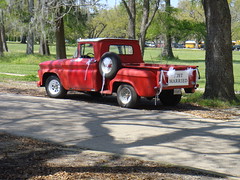
Fantastic weather. Drove off in the truck. Married to the love of my life, Candice.
Take care, y'all.
Take care, y'all.
Tuesday, March 23, 2010
Sunday, March 14, 2010
Offshore History - "Offshore Pioneers"
I've been on the hunt for a good history of the offshore industry. So far, I haven't found a really good one.

The Prize is probably, overall, the best history of the oil industry. There are some omissions and minor errors, but from a story-telling standpoint, it can't be beat. It also doesn't really concentrate on offshore.

Oil 101 by Morgan Downey is probably the best from a pure factual and bias standpoint. Morgan Downey was an oil trader on Wall Street who had a very good grasp of the technical aspects of the oil industry. It's very dispassionate in its presentation and it's very, very thorough with a good chapter on Exploration and Production that takes up half the book. The problem with the book is its halfway a reference manual, so it's not much on narrative.
While hunting around I came upon a history of Brown & Root (B&R):
Offshore Pioneers: Brown & Root and the History of Offshore Oil and Gas

It took a little while to find a copy, because it's be out of print for about 10 years. The book was put together by 3 history professors who got funding from Brown and Root, but it's openly disclosed in the forward, so you have a heads up about the bias. It's very pro-B&R, obviously, but the advantage of that is they got access to so many key people. It's not a 100% whitewashing of history, but what I like is even if they would whitewash some of the B&R history, they had no qualms about dumping on the competition.
For example, Shell's Cognac platform was built in '77-'78 by New Orleans-based J. Ray McDermott. It was a HUGE milestone in offshore engineering at the time. It was a fixed structure in over 1,000 feet of water that cost $250 million to build and weighed 59,000 tons.
Well, one of the things that's talked about in the book was that B&R built a two platforms for Union Oil in almost as deep water (~955 feet vs. 1,025 feet for Cognac) that each cost less than $90 million. B&R was better able to calculate the forces and their interactions and could thus shave down the weight of the tower down to 26,000 tons.
In a little jab at Shell, the platforms were named Cervaza and Cervaza Light (Garden Banks Blocks 160 & 158). You see, Cognac is expensive and beer is, well, not... Engineer humor... Hardy har har...
The two best chapters in the book weren't really about B&R at all, though. They were about Project Mohole and Taylor Diving.
Project Mohole was an attempt to use an offshore drilling vessel in 15,000 feet of water to drill through another 25,000 feet of the earth's crust to the Mohorovičić discontinuity, collecting core samples the whole way down, and recover a piece of the Earth's mantle. Keep in mind, when Project Mohole was initiated, the deepest offshore well at that time was in only 200 feet of water. The project required taking existing technology and pushing it forward not just evolutionarily, but by leaps and bounds.
Today's most advanced Polycrystaline Drill Bits are direct descendants of the drill bit developed in the Phase I test. In that test, the drillship stayed in place with dynamic positioning, drilled an initial hole, and (through much trial and error) re-entered the original hole, and captured samples from a subsurface column of basalt. A drill bit studded with thousands of tiny diamonds was necessary to cut through the basalt, which was like drilling through hundreds of feet of steel.
Project Mohole suffered a series of major cost overruns and was always a target of political sniping. Eventually, the project was axed, mostly to pay for the Vietnam War. Imagine what sort of contributions to petroleum engineering, geology, and geophysics might have been made if it wasn't axed to pay for a pointless war...
As it was, prospects like BP's Tiber & Exxon's Blackbeard wouldn't be happening at this time without the jolt that Project Mohole gave to deepwater drilling. While things were a little better back then, private companies HATE spending money on R&D, especially on things where the usefulness-horizon isn't in X-many quarters.
The other chapter I really liked was about Taylor Diving. If it's related to human beings breathing or working under water, it was developed either by the US Navy or Taylor.
The funniest thing is how Taylor Diving got its start. It was started by three guys. Two of them were Navy veterans and the third, Jean Valz, was a veteran of the French Resistance. In 1959, L. E. Minor, the head of engineering for B&R, was out drinking on Bourbon Street and stopped in Lafitte's Blacksmith Shop, one of his favorite watering holes. Moonlighting as a piano player was Jean Valz. The two struck up a conversation and by the end of the year, most of B&R's diving work was subbed out to Taylor. Both companies would later be bought by Halliburton.
Taylor Diving, as time went on, conducted research into underwater welding and saturation diving at their test facility in Belle Chasse, LA. They could simulate dives past 1,000 feet and could play around with air mixtures and welding filler rods and everything, all under close supervision by doctors.
Offshore Pioneers is good at filling in the details and dates for a lot of things I've heard of randomly working in the oil business, but not in a thorough, systematic way. I'm still on the hunt for one all-encompassing offshore history, though.
The Prize is probably, overall, the best history of the oil industry. There are some omissions and minor errors, but from a story-telling standpoint, it can't be beat. It also doesn't really concentrate on offshore.
Oil 101 by Morgan Downey is probably the best from a pure factual and bias standpoint. Morgan Downey was an oil trader on Wall Street who had a very good grasp of the technical aspects of the oil industry. It's very dispassionate in its presentation and it's very, very thorough with a good chapter on Exploration and Production that takes up half the book. The problem with the book is its halfway a reference manual, so it's not much on narrative.
While hunting around I came upon a history of Brown & Root (B&R):
Offshore Pioneers: Brown & Root and the History of Offshore Oil and Gas
It took a little while to find a copy, because it's be out of print for about 10 years. The book was put together by 3 history professors who got funding from Brown and Root, but it's openly disclosed in the forward, so you have a heads up about the bias. It's very pro-B&R, obviously, but the advantage of that is they got access to so many key people. It's not a 100% whitewashing of history, but what I like is even if they would whitewash some of the B&R history, they had no qualms about dumping on the competition.
For example, Shell's Cognac platform was built in '77-'78 by New Orleans-based J. Ray McDermott. It was a HUGE milestone in offshore engineering at the time. It was a fixed structure in over 1,000 feet of water that cost $250 million to build and weighed 59,000 tons.
Well, one of the things that's talked about in the book was that B&R built a two platforms for Union Oil in almost as deep water (~955 feet vs. 1,025 feet for Cognac) that each cost less than $90 million. B&R was better able to calculate the forces and their interactions and could thus shave down the weight of the tower down to 26,000 tons.
In a little jab at Shell, the platforms were named Cervaza and Cervaza Light (Garden Banks Blocks 160 & 158). You see, Cognac is expensive and beer is, well, not... Engineer humor... Hardy har har...
The two best chapters in the book weren't really about B&R at all, though. They were about Project Mohole and Taylor Diving.
Project Mohole was an attempt to use an offshore drilling vessel in 15,000 feet of water to drill through another 25,000 feet of the earth's crust to the Mohorovičić discontinuity, collecting core samples the whole way down, and recover a piece of the Earth's mantle. Keep in mind, when Project Mohole was initiated, the deepest offshore well at that time was in only 200 feet of water. The project required taking existing technology and pushing it forward not just evolutionarily, but by leaps and bounds.
Today's most advanced Polycrystaline Drill Bits are direct descendants of the drill bit developed in the Phase I test. In that test, the drillship stayed in place with dynamic positioning, drilled an initial hole, and (through much trial and error) re-entered the original hole, and captured samples from a subsurface column of basalt. A drill bit studded with thousands of tiny diamonds was necessary to cut through the basalt, which was like drilling through hundreds of feet of steel.
Project Mohole suffered a series of major cost overruns and was always a target of political sniping. Eventually, the project was axed, mostly to pay for the Vietnam War. Imagine what sort of contributions to petroleum engineering, geology, and geophysics might have been made if it wasn't axed to pay for a pointless war...
As it was, prospects like BP's Tiber & Exxon's Blackbeard wouldn't be happening at this time without the jolt that Project Mohole gave to deepwater drilling. While things were a little better back then, private companies HATE spending money on R&D, especially on things where the usefulness-horizon isn't in X-many quarters.
The other chapter I really liked was about Taylor Diving. If it's related to human beings breathing or working under water, it was developed either by the US Navy or Taylor.
The funniest thing is how Taylor Diving got its start. It was started by three guys. Two of them were Navy veterans and the third, Jean Valz, was a veteran of the French Resistance. In 1959, L. E. Minor, the head of engineering for B&R, was out drinking on Bourbon Street and stopped in Lafitte's Blacksmith Shop, one of his favorite watering holes. Moonlighting as a piano player was Jean Valz. The two struck up a conversation and by the end of the year, most of B&R's diving work was subbed out to Taylor. Both companies would later be bought by Halliburton.
Taylor Diving, as time went on, conducted research into underwater welding and saturation diving at their test facility in Belle Chasse, LA. They could simulate dives past 1,000 feet and could play around with air mixtures and welding filler rods and everything, all under close supervision by doctors.
Offshore Pioneers is good at filling in the details and dates for a lot of things I've heard of randomly working in the oil business, but not in a thorough, systematic way. I'm still on the hunt for one all-encompassing offshore history, though.
Don't park on the parade route
Remember, it's for your own good.
Man, it's going to take forever to clean up this car. Don't forget about the dents in the hood from people standing on the vehicle. The parade goers have even tied strings of beads to the roof rack.
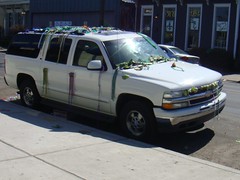


Man, it's going to take forever to clean up this car. Don't forget about the dents in the hood from people standing on the vehicle. The parade goers have even tied strings of beads to the roof rack.
Sunday, March 7, 2010
Project Truck Update: Getting all dolled up Edition
When we last left off, Patches still had a blown exhaust gasket. Well, we're finally past Saints in the Superbowl, Mardi Gras, bad weather, and all, so today it was back to work.
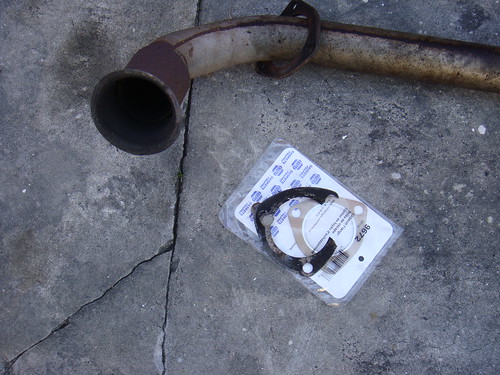
It took a little while to get everything pulled together. The first trip of NAPA left me with the wrong sized gasket. When it's possible to get the wrong size gasket, you will and then you'll find NAPA is closed. That was me a couple of weeks ago. Today, though, I had the right gasket.
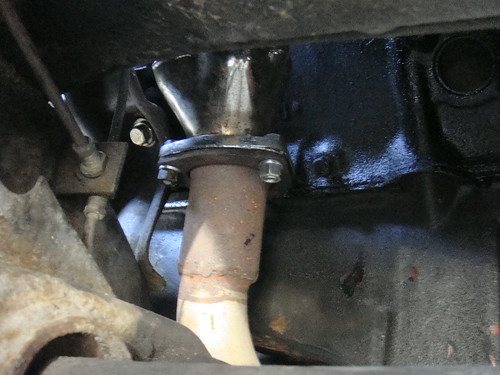
Got the whole exhaust attached. Not too many photos of the process. It was a lot of grunting and torquing and yelling and grease and grime and sweat. In other words, fun!
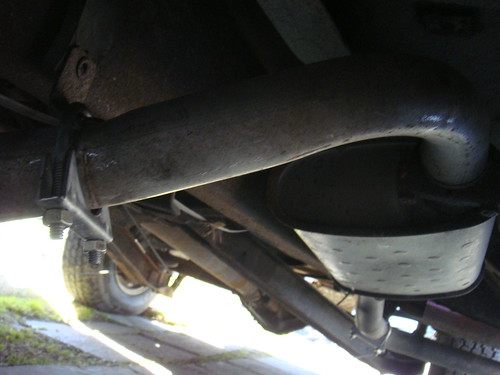
I had some help from Steven and we got everything back in place and replaced all the exhaust U-Bolts.
Patches is now even relatively quiet!
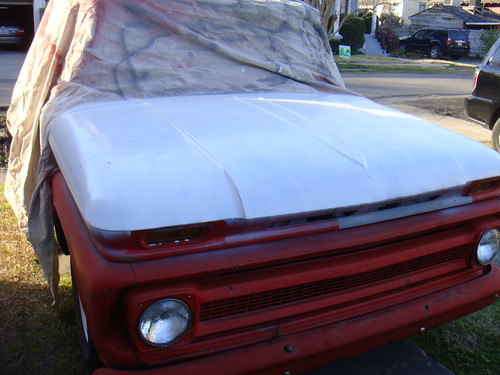
Also gave Patches a nice new coat of paint on the hood.
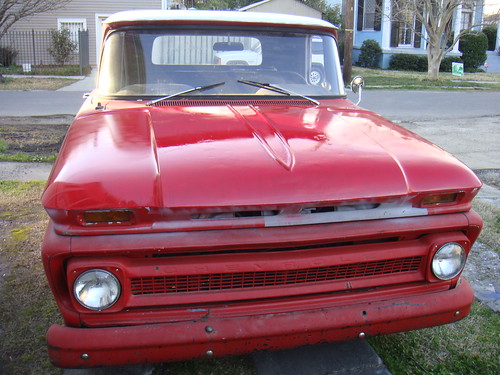
Patches will (weather permitting) make an appearance at the wedding (now less than 3 weeks away). We have to have her looking her best. Candice has been getting ideas on how to dress Patches up...
It took a little while to get everything pulled together. The first trip of NAPA left me with the wrong sized gasket. When it's possible to get the wrong size gasket, you will and then you'll find NAPA is closed. That was me a couple of weeks ago. Today, though, I had the right gasket.
Got the whole exhaust attached. Not too many photos of the process. It was a lot of grunting and torquing and yelling and grease and grime and sweat. In other words, fun!
I had some help from Steven and we got everything back in place and replaced all the exhaust U-Bolts.
Patches is now even relatively quiet!
Also gave Patches a nice new coat of paint on the hood.
Patches will (weather permitting) make an appearance at the wedding (now less than 3 weeks away). We have to have her looking her best. Candice has been getting ideas on how to dress Patches up...
Subscribe to:
Comments (Atom)