Showing posts with label economics. Show all posts

Wednesday, December 27, 2017

The Deindustrialization of South Louisiana


The oil bust has started to level out, but we're still seeing the effects of the deindustrialization of South Louisiana, it's been touched on by The Advocate and Library Chronicles  and I'd like to take a moment to discuss it a bit further.  It's had some coverage in the media, but nobody has ever really managed to tie together a lot of threads to my liking.  

Louisiana went from ~172k manufacturing jobs to just ~135k.  Employment isn't even flat, not to mention lagging population growth.  

(From The Advocate)

Some of this is natural boom/bust cycle of mineral extraction, but lately there's been more than that.  
The above graph is mining/logging (upstream oil and gas) employment in Louisiana from the Bureau of Labor Statistics.  You can see the big dropoff that led to the latest oil bust (the worst bust in at least a generation).  There's been somewhat of a boom in the downstream (refining) and midstream (pipeline) side of the oil patch, but that's been somewhat muted and hasn't completely softened the blow.  The recent runup to ~$65/bbl also hasn't done a lot to revive job growth.  

Louisiana used to also have a more diverse group of manufacturers.  For example, Michoud used to crank out external tanks for the Space Shuttle program.  

As the shuttle program slowed to a crawl after the Columbia explosion and eventually ended, Michoud went into a semi-dormant state.  It's not shuttered; they still make several things at Michoud (structural components for the F-35, some big LNG tanks, and components of the delayed Space Launch System [SLS] program).  Michoud is a special facility; if you want to send something big into space and launch it from the Cape, you pretty much have to build it at Michoud so a renaissance someday under, say, SpaceX isn't out of the question.

Louisiana's largest industrial employer up until very recently was Avondale Shipyard.  I recently read a book, The Yard, by Michael Sanders, that was primarily about Bath Iron Works, but talked quite a bit about how healthy Avondale  at that time (2001)  in comparison to the other Navy shipyards.  I half expected the book to end with the closure of Bath and success of Avondale.  Avondale had the cheapest labor pool of any of the major naval shipyards, had large facilities, and out of all the naval shipyards had the best track record of doing commercial/nongovernmental work.  One would think that those advantages would keep the yard open.

Unfortunately, as we all know Avondale Shipyard closed.  There's still a very small amount of engineering and drafting work being done at Avondale, but it's pretty much closed.  Recently, the floating drydock was towed away (for scrapping?) in South America:
Photo via WGNO.

Without that floating drydock, Avondale will never be a real shipyard again.  That drydock has a side that drops away and allows for large vessels to be onloaded, floated out, and gently launched in the water.  Launching a big ship the old fashioned way (via a Ways) is too risky and too complicated to do for large vessels in as tight and congested a waterway as the Mississippi.  Building a new drydock would cost at least $50m on top of acquisition costs for the shipyard.  I heard a rumor Huntington Ingalls is asking $40m for the site; the Port of New Orleans, one of the few potential buyers heard that price and laughed.

Why did Avondale close?  There's always a plethora of reasons for something big like this (many detailed here), but a few I'll touch on are first off, the general downturn in naval shipbuilding (after the buildup of the 80's combined with the demise of the Soviet Union, just not as much of a need), the demise of the domestic shipbuilding industry after the elimination of Tittle XI of Commercial Differential Subsidies in 1981 (more here and here in Chapter 10 of "Staying Afloat"), the failure to adopt more modern construction techniques (Avondale was actually the first US shipyard to install an automated panel-line welder, but later lagged in the adoption of "Group Technology" shipbuilding practices), and the consolidation of the industry.  That last one is the final nail in the coffin, as Avondale and Pascagoula were both owned by Newport News Shipbuilding [Northrup Grumman] and as there was less work to go around, the corporate parent picked which child it wanted to live and which to let whither away.

Pascagoula also had an added advantage in that last fight: Pascagoula was awarded nearly $2B to rebuild after Hurricane Katrina; Avondale didn't get such an award [but did have significant disruption to its workforce housing in Katrina].  Taxpayers basically bought Huntington Ingalls a brand new shipyard.  If you could only keep one shipyard open, which would you choose: the brand new, modern, efficient one or the old one that has airdraft restrictions (bridge height)?  There was a GAO audit against Pascagoula and they didn't get to keep all of the $2B, but they kept enough to make the difference.

The other major industrial employer in South Louisiana that used to employ nearly as many as Avondale (at least when times were good) was McDermott's large fabrication facility in Amelia, Louisiana.  The Amelia facility started in 1956 and went on to build some of the largest and most complicated offshore structures of anyplace on earth.  It actually outgrew its first location on Bayou Beouf and moved further down the bayou.  When times boomed, it'd be end to end jackets spread over hundreds of acres with thousands of workers.
1977 Press Photo Project Cognac, Drilling Platform for Shell Oil Company
Being attached to a highly cyclic industry, the workforce size rose and plunged with the price per barrel, but McDermott seemed to hold onto enough talent during the busts to be the quickest on their feet when the boom returned.  One example of how I've heard is the McDermott side of the story of the American Queen.  Everyone hated working on the American Queen.  The vessel was actually built mostly on spec by McDermott without a really firm contract up front.  The fab yard never really wanted to become a shipyard (oil patch and shipbuilding being dissimilar enough), but the management knew a boom would later come and wanted to hold onto as many hands as possible.  Suppliers got pushed around and annoyed, workers were ridden hard, but eventually the ship was finished in 1995, just in time to clear the yard for Shell's series of TLP's mostly built at McDermott (whose hulls were built overseas and generally integrated to the Topsides elsewhere).  While it was a rough project that McDermott didn't make a profit on, the boat filled timesheets and a lot of folks learned good lessons from that project.  The American Queen didn't do well under the first operator, who went into bankruptcy, but the new owner is doing quite well, so I've heard.  It seems that American tourists are too terrified of getting beheaded by ISIS to go on Danube cruises and are sticking closer to home.

So, it came as some surprise when lots of rumors of the Amelia Fab yard's closure started to come out in the early 2010's.  Oil prices were still well over $100/Bbl.  But, McDermott, who used to be the top name in offshore fabrication had been slowly supplanted by Kiewitt Offshore Services (KOS) in Ingleside, TX.

One of Kiewitt's keys was the HLD (Heavy Lifting Device):
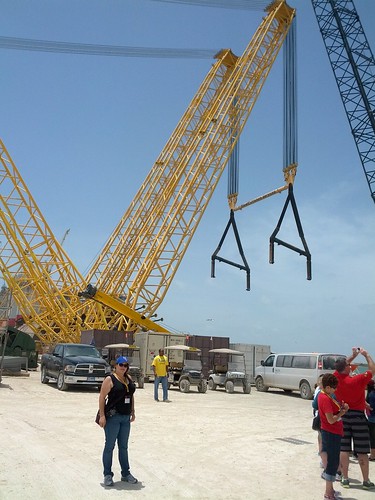
Candice and HLD

Engineers should never be allowed to name anything because HLD is a horrible name; the largest crane in the Western Hemisphere should have a cooler name than that.  The HLD allowed the lifting of bigger, more complete modules for deeper water, more complicated platforms.  One story I've heard is that the HLD was actually a "design in a drawer" that originated with McDermott engineers, but management didn't have the vision to see the market and balked at the pricetag. Those engineers quit, convinced Kiewitt to enter the market with a substantially lower, innovative bid that beat McDermott to win one project and Bullwinkle Constructors LLC (a limited liability corporation Kiewitt partnered in) was later converted into KOS.

McDermott

McDermott Amelia's days were numbered as the rumors turned out to be true.  McDermott shifted its operations to Altamira Mexico, where they've hired a thousand workers this year, even in a down market.  Their New Orleans engineering office was also shuttered as everything consolidated to Houston.

The upswing of a sustained oil boom are over.  The state now has a hangover with massive job loses (in fact, Houma-Thibodaux currently has the fourth most depressed economy in the nation (ranked by census tract), TOPS perennially teetering on insolvency and the state's budget is in shambles.  What comes next?  Does everyone just pack up for Houston?  I sure as hell hope not.  What comes next is we get up, figure out what comes next, and do it.

Update: Chouest predicts 2018 will be yet another slow year. Chouest is one of the last medium sized industrial manufacturers left in Louisiana.

Upperdate: Minor corrections for clarity and spelling.  

Saturday, February 25, 2012

Book Review: Poorly Made in China

Poorly Made in China: An Insider's Account of the Tactics Behind China's Production Game

I just finished Poorly Made in China and wanted to highlight some of my key takeaways in the book. The book recently made The Economist's Book of the year list (Book review - The Economist). Paul Midler has lived in China for over 15 years and worked as an outsourcing consultant for small-to-mid-sized companies on a range of products. He wrote the book because he was shocked at what he saw. The book was written as a response to the string of 2007 Chinese quality scandals (yes, it even it's own Wikipedia page; and 2008, and then there's Chinese Drywall). It took him a year and a half to finish, so it sort of had a quiet launch, until The Economist picked up on it.

The book is not an overview of the 2007 quality scandals. He references them only briefly. Some interesting notes: the infamous Mattel lead paint toys case involved a Chinese factory owner who had worked for Fisher Price for 15 years and had an estimated net worth of ~900 million USD. It was a symptom of what Midler refers to as "Quality Fade."

Here's an article he wrote in 2007 (that also served as the seed for the book) about quality fade: Dealing With China's 'Quality Fade' - Forbes.com

Some of the other takeaways:
* The reason China does so well initially attracting business is: #1 very, very low crime rate (at least for Westerners), #2 low initial price point (although subject to rises over time), #3 zero regulation (want to discharge wastes from a galvanizing operation directly into the sewer? No problem!), #4 ease of access (a business traveler can get a cheap ticket over there, then stay in very inexpensive hotels, and come back to the US for less than he budgeted; comparable trips to Mexico or Dominican Republic are extremely costly due to security constraints).
* Chinese factories deliver low prices because they'll sell at-cost to US markets, then sell knockoffs of the same products to Latin America, Mid-East, etc. for double/triple the price they're selling it to the US (generally "borrowing" the intellectual property/design/etc. in the process).
* Chinese factories are described as 'almost mid-evil' level of technology. The average factory is a series of long tables, with lines of stools (generally without backs, made from scrap wood) with massive amounts of human labor substituting for what machines would do in the West. I've been to a few US factories and it's amazing the level of technology you'll see; so long as it lowers the marginal cost and there's enough volume, you'll see lines of the most expensive computer-controlled CNC machines. The only machinery in Chinese factories is generally worn-out, obsolete equipment from the West.
* China is not THE lowest cost producer. Vietnam generally beats them out on labor costs.
* There's a bias out there that "Made in America" is too expensive, while "Made in China" guarantees you're getting a good deal (at least on price). Say you want to buy bolts. A Chinese factory quotes you 68 cents/ea.. You think you're getting a good deal. If you go to a US factory and they quote you 68 cents and "Made in America", people think they can get it cheaper elsewhere. A US manufacturer, thanks to automation, mechanization, and superior methods, might actually be the less expensive manufacturer, while a Chinese manufacturer may only meet that price point while sacrificing something (namely, quality).
* A lot of the business-people in China, especially among the lower-to-mid-size companies are incredibly naive. Those are the best stories in the book. A Chinese factory was making 'private-label' beauty products for an un-named CVS/Walgreens/etc. and the 'CVS' buyer kept complaining they were getting 'screwed out of pH'. The pH was on the lower end tolerance range (~6 in a ~6-7.5 range). Meanwhile, the factory was doing all sorts of other substitutions behind their back that they weren't even checking. Upon being challenged, the 'CVS' buyer didn't even know what pH was, much less have the idea to test for bacterial contamination of the lots of body wash, shampoo, etc. that were coming into their store by the shipload. Because they didn't know how to make anything, they had no idea how a manufacturer could screw them over. The Chinese product had a "not tested on animals" label, primarily because there was no testing done whatsoever!

One of the things I enjoyed about the book is it's a business book, but there's very little 'business' in it; it's mostly about relationships and Chinese culture. That's also this reviewer's take. Some of the cultural nuances were remarkably like America, in a way.

Also worth a look: Paul Midler's Blog. Especially the older entries.

Also of note: Dumping China for America - CNN Money

-------------------------------

On a personal note: one of the reasons I've become interested in this book is I've gotten into valve procurement in a big way. The valve business is very, very competitive and a valve you bought 10-15 years ago that used to made in the USA with a good reputation for quality is now either 'assembled in the USA' (with Chinese-made parts) or wholly-made in China due to commercial pressure. I was at a meeting when we went through valves and name after name was "made in China" (partly or completely), I asked 'is there anyone who isn't?', the older engineer looks over at me and says, "yeah, Company Z. Their valves are made in India" Me: "Um..."

Now, we try do as much as possible to test the valves and to screen out the worst offenders, but the whole process has left me with some uneasy feelings. The valve salesman won't be around when the project starts up. I will and the operators will work next to these valves for years to come.

Note that Paul Midler ends his book with a GUARANTEE of further Chinese quality scandals.

NOTE- Some edits for spelling and clarity.

UPDATE- I've been spreading the word:

Chinese Democracy

Made in China

Monday, December 5, 2011

Saturday, November 19, 2011

Links of the Day - Economics

If you read no other link, scroll down and read the last one.

"Our problem is not that we don't have enough stuff -- it's that we don't have enough ways for people to work and prove that they deserve this stuff." Unconventional story will give you a new way of looking at things.

This symptom probably applies to the majority of Air Force procurement projects. More Air Force officers can fly Powerpoint than fly an aircraft (sad but true).


...Due to having the largest portion of their supply chain within the US.


So says one of the stars of "Deadliest Catch"

German executive arrested under Alabama's Immigration laws. That'll attract foreign investment...

A free market, until it's their neck in the noose.

Nabors Drilling Exec gets fat payday
Isenberg's payment would exceed Nabors' third-quarter profit of $74.3 million. A horrible executive gets a gigantic payday, against the wishes of the stockholders.

Banks are unpopular with #OWS'ers and conservatives.

With Christmas shopping around the corner, long live the Consumer?

And people accuse the #OWS crowd of hating bankers...

Can you imagine letting prisoners save your house? Coming to a budget-strapped city near you!

World Power Again Swings back to America
Talks about 80's US/Japan fall/rise trend that ended up with a lot of journalists with egg on the face. One key factor: a weaker dollar helps out US manufacturers. There were also some interesting discussions on Twitter about how NOLA-area merchants LOVED it when the dollar was weaker because they had European tourists spending like mad. Now, with the Euro in the gutter, those tourists are gone.

Fascinating article

Michael Lewis is the best writer out there when it comes to the economy. He covers the German/Greek debt crisis from an unusual perspective.

H/T : "Read this then tell me who has done more damage to the country, Al-Qaeda or business schools"

Statistics-rich article.

Over the past decade, on average, wages have risen only for Americans with graduate degrees

Report: Rich-poor gap growing - Mackenzie Weinger - POLITICO.com
50% of US workers made less than $26,364 last year

A sobering read.


Now THIS is an interesting monkey wrench.

Linked to by LGM.

"American firms have been laying-off their engineering staffs for years. In today’s world of MBA-managed companies, R&D is perceived as not being a good use of money." Horrifying.

Sunday, September 4, 2011

'The best thing the government's done since the National Do Not Call Registry'

Wired: Feds are Right to Stop AT&T Merger. Great, systematic debunking of the proposed AT&T/T-Mobile merger.

After years and years of letting big corporations get away with all sorts of appalling shenanigans, from mortgage securitization to insider trading to using Main Street & everyone's 401(k)'s as their own personal gambling funds, it's amazing that something so obviously disastrous actually gets attacked. One of the best quotes of the modern era is from Matt Taibbi: [on Goldman Sachs] "a great vampire squid wrapped around the face of humanity, relentlessly jamming its blood funnel into anything that smells like money."

The reasons why the AT&T and T-Mobile merger are a bad idea are incredibly obvious. We've already broken up AT&T once (United States vs. AT&T, 1982) and it was a boon to the consumer. I remember going through some old documents of my grandfather and being astounded at the cost of the old telephone bill. It was like inflation never happened.

The modern AT&T incarnation sucks as a phone carrier. It's terrible at innovation. AT&T iPhone users hopped to the competition at the first opportunity.

The only thing AT&T does well is bribe politicians. They are the largest corporate donor to campaigns since 1990. They really don't care which party they bribe, either (45/55 Dem/GOP split). They're equal opportunity enticers. Hell, they'll even bribe state politicians (Thanks again, Bobby and the notoriously corrupt Louisiana Public Service Commission). Companies like AT&T are the reason establishment politicians (whether they are Boehner or Dianne Feinstein) suck. Americans of all political persuasions HATE huge, unresponsive corporations. And people wonder how we get to "too big to fail..."

And I'll close with a quote from the Wired article I really like:

AT&T is the single largest corporate donor to politicians and it’s used to getting its way.

...

This go round, the Justice Department is realizing that what’s good for AT&T isn’t often what’s good for Americans — no matter how many lobbyists and political donations Ma Bell can afford.


UPDATE- Here's the dinner and drinks menu for the wining and dining of lawmakers the bastards at AT&T are trying. $52 steaks and cucumber martini's...

Saturday, August 20, 2011

Link Dump - 20 August 2011

Crime:

People tend to overestimate their own intelligence. Funny story at the beginning of the article.

There are other articles out there that are better on one aspect of it, but this is by far the best overview of the spread and damage done by the Stuxnet worm.


Gives some great perspective on how the Wikileaks Afghan War Logs got leaked. Also, nice to read the unedited logs to get the whole perspective (although it takes some skipping around).

Anthrax killer still unknown?
FBI mucks up the case yet again.


Lee Zurik is lazy
So sez Aaron Bennet


Original article. Well worth a read. Great investigative journalism.


Economics:

Answer: get some practical experience. In the US for engineers, the Senior Project is looked at very closely by employers.


China seeks to displace Korea as the king of the shipbuilders. Korea will start concentrating on higher-value ships (LNG tankers, for example) as China's government pumps money into the shipbuilding industry to build capacity.


Note the article focuses only on Mexican immigrants (not other Latin American countries). Economic progress and less corruption keeps Mexico's best and brightest home.


Discussion of choosing between technical track and managerial track positions. I don't necessarily agree with everything that's presented in the article, but the comments at the end are also good.


Shocking article. Also mentions the USCG/MMS hearings in New Orleans.


Energy

Also check out the 'Chats with nuclear dad' on the Georneys blog. A PhD candidate in geology interviews her nuclear engineer dad on Fukushima and other nuclear topics.


Lots of the early missions are still classified (NRO/NSA satellite launches, mostly) and there were some incidents that were never widely known.

Young Men and Fire
The Practical Pyromaniac, reviewed by Adam Savage


Retrain Shuttle workers to inspect Offshore?
Not as crazy an idea as it soundsh


Note that many major oil companies have negative reserve replacement ratios and don't even have a plan to reverse that trend; they'd rather live high on the hog on booked reserves. If you look at oil patch history, on the long run, it's cheaper to find and book barrels today rather than wait until tomorrow....

Squirrels changing trees: Republican edition
MMS tuns to BOEMRE. Now it's BOEM, OESS, and ONRR.


If I ever become dictator, everyone will drive stickshifts. It will stop distracted driving, lower energy consumption (and hence oil prices), and be safer.


From the Houston Chronicle, with hilarious appeal to 'stop sending us those crazy emails'


War:
A history of the Littoral Combat Ship


Syrian soldier's view on being ordered to shoot at his neighbors.


Politics:

For lesson in shared sacrifice, send Congress to boot camp - CNN.com
Lt. General Russel Honoré thinks Congress should be sent to boot camp: "Put them in tents with no air conditioning, have Army drill sergeants teach them teamwork and physical sacrifice. When they recognize their responsibility to the people of America, they can return to D.C."


List of books read by Obama over the past ~2 years.


Friday, June 11, 2010

4 Horsemen Approach South Louisiana?

The demise of South Louisiana has been forecast many times before, but we're now looking at some bleak times.

There is of course the Gusher in the Gulf that just goes on and on, ruining the environment and putting the fisherman out of business. P&J's is hit and almost every single fishing ground in the state will eventually get whacked. So many people in South Louisiana are employed bringing nature's bounty to shore.

There's also the "Economic Nightmare" of the Drilling Moratorium. Thousands of Louisianians are employed working offshore or supporting those offshore (including yours truly) and the rig count is one of the most important factors in the health of the industry. Artificially setting it to zero will have consequences.

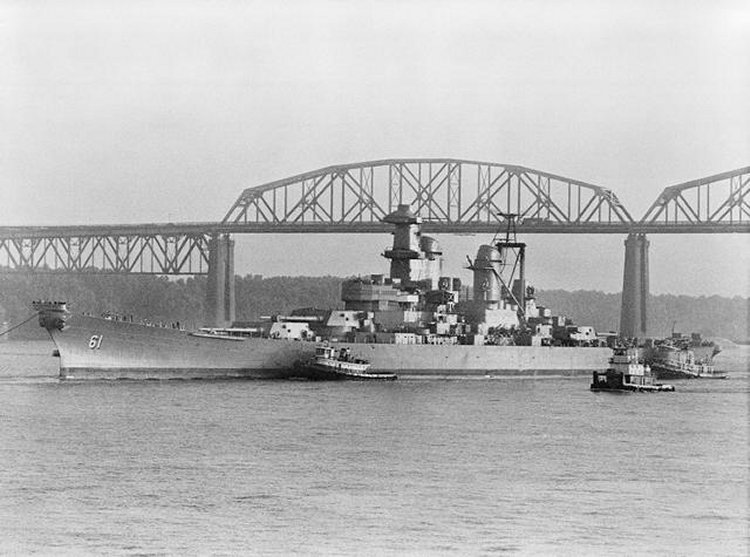
Another factor to consider: Avondale Shipyards is looking at tough times. It was once the largest private employer in the state. As recently as the 90's, it was still the 3rd largest employer in the state. Candice's grandfather was one of the many throughout the tiny Acadiana towns to take the bus to the yard. Business is slowing dramatically and while they're OK for now, there's not much on the horizon to give them hope. From what I understand, it's a mixture of factors. First off, Louisiana doesn't have the congressional heft it used to. Landrieu has some swing, but the rest are pathetic and it's a far cry from the days of Breaux, Livingston, Boggs, and even $Bill. Avondale is also a bit of an old yard. It's main advantage is that it's got access to deep draft waterways (the Mississippi has 3, 100'-deep channels all the way up to about Baton Rouge). Northrup-Grumman, which also owns Pascagula, is looking to shift workers to Mississippi, where they have plenty of work for the foreseeable future and a much more modern yard. Northrup-Grumman may even completely close Avondale. Most of the newer US Navy ships tend to be shallower draft, anyway (most of the capital ships started under the 600-ship navy program are still in service with less of a need for replacements at the moment). Here's a nice photo for old-time's sake: USS Iowa passes under the Huey P in 1982.

Finally, Michoud only has a few more E.T.'s left to ship and is facing big job losses.

Oh well, at least there'll be the lawyers suing BP to support the economy (unless of course, the trial gets sent to Houston)...

UPDATE- Avondale Shipyards to close, according to Northrup Grumman.

Sunday, November 8, 2009

Sunday Reading Assignments

For you while you're waiting on the afternoon Saints game:


An Administration Run Amok. By Clancy DuBos. Goes over the Meffert indictment and what it illustrates about Nagin's 'leadership abilities.'

After Friday’s 63-count corruption indictment against former city technology chief Greg Meffert — once Nagin’s top aide and close friend — it’s hard to distinguish our present mayor from his predecessor.


What Gets Measured Gets Done. By Brian Denzer. Talks about crime, accurate statistics, and successful reform. More on NOLA Stat here.

Blakely Redux. By James Gill. The politician-skewering maestro's first column in a while gets an above-the-fold-headline in the dead tree edition and a well deserving target. Although one contributor on the idiot page disagrees with Gill's assessment of Dr. Blakely.

Deadspin- Why Your Stadium Sucks: Yankee Stadium. Yuck the Fankees.

And two final ones: The Case for Inflation vs. The Case for Deflation. Which will have a greater effect on the economy: Barack Obama "printing money" or Wall Street's financial wizardry going kablooey?

Saturday, October 17, 2009

Economic News of Note - 17 Oct 2009

Birth-Rate Study: In Recession, Fewer Women Having Kids - TIME

Another casualty of the recession: Birthrates. US Birthrate down more than 2%.
_____________________

Apple joins Chamber of Commerce exodus over climate change scepticism | Environment | guardian.co.uk

As fluffy as this may sound, this is a portent of bigger battles between companies that have historically benefited from externalized costs and those that seek a more accurate reflection of the true production costs.
_____________________

AIG's Benmosche: The tone deaf CEO - Oct. 6, 2009

AIG head is the most tone-deaf CEO out there. Ends with an interesting quote: "He called us idiots, he called us corrupt," said Sherman, the California lawmaker. "I do have to thank this guy for his insults. He caused us to wake up from being completely asleep." He had a hell of deal going (US taxpayers funding his business), but he's so goddamned greedy, he's screwing it up. He just can't help himself.
_____________________

Rolfe Winkler » Blog Archive » TARP deadbeats | Blogs |

US Taxpayers getting screwed by the bailouts. CITIGROUP amongst the deadbeat bailout recipients. Any talk of the US taxpayer 'making money on this deal' is total bull.
_____________________

THE CUNNING REALIST: "Shabby Secret"

Great discussion of what's driving the collapse of the dollar. There's no doubt that Obama's spending is causing international concern about the dollar. But just as important is the new status quo of "too big to fail" for the financial sector and what that means for various aspects of Federal Reserve policy. The implicit government guarantee of a few GSEs was an important factor in the financial crisis. There's now an explicit government guarantee of every large financial institution on Wall Street. Almost two years after the Bear Stearns debacle, there are still no plans by the government to unwind or repudiate that guarantee. He also makes a very good point that the current trend may have overplayed itself, at least in the short term.
_____________________

The Lost Generation - BusinessWeek

Huge unemployment rates for recent graduates. The market you graduate in makes a huge difference in your career. This could be one consequence of the Recession that lasts and lasts. I'm very glad I graduated when I did. Many friends of mine are not so lucky.
_____________________

China buys the world - Start your engines (8) - FORTUNE

China's global shopping list. The Rio Tinto escapades were particularly interesting.
_____________________

No shame in walking away from mortgage - The Big Money- msnbc.com

Walking away from mortgages is a legitimate tactic, or so the article argues. The system was designed to prevent debt slavery and to encourage banks to be careful about who they lend to.
_____________________

Quiet Atlantic hurricane season a boon for insurers | U.S. | Reuters

Insurance companies rake in huge profits on quiet hurricane season, thanks to El Nino.
_____________________

Ruling could undo thousands of foreclosures - BostonHerald.com

Thousands of foreclosures potentially overturned because of lost paperwork. Was the paperwork lost, or was it destroyed to hide a trail of criminal malfeasance by mortgage brokers?
_____________________

Emphasis on Growth Is Called Misguided - The New York Times

Poking holes in G.D.P. as a measure of economic health of a country
_____________________

Utility Snubbed by Banks Shows States Pay Too Much (Update2) - Bloomberg.com

Government entities get screwed when borrowing money. AAA government debt more expensive than AA- private debt. Utah (AAA rated) was charged 0.11% more on $500 million in bonds than Wal-Mart (AA2/AA). This is a huge disparity and I have no idea why it isn't covered more. Investing in government bonds is about the safest thing you can do and the returns are, in relation to the risk, surprisingly good, but never spectacular. Is there a reason for the institutional bias?
_____________________

Europe Richer Than America - Forbes.com

EU now richer than NAFTA. Europe, as a whole, has been hit less by the Recession than the US. _____________________

$Bill, Meet Debt Slavery

The founding fathers were very concerned about debt and it's role in society. They did start the national debt, which stimulated the economy, but they also included authorized Congress to set up Bankruptcy Courts in the very first article of the Constitution. On the flipside, Thomas Paine rallied in favor of the Estate Tax as a way of preventing a permanent oligarchy/underclass in this country. Bankruptcy also made the banks much more cautious about who they made loans to.

There was a lot of give an take on issues relating to that over the centuries, but the balance started to change in the late 90's. Congress passed a bill to make bankruptcies much tougher. Bill Clinton vetoed that bill after Hillary implored him to because of the devastating effects on single parents.

Later on, under the guise of preventing fraud, Congress passed the Bankruptcy Abuse Prevention and Consumer Protection Act and George W. Bush signed it into law. Left-leaning Democrats complained it was a step on the road to Debt Slavery. One of the crooked Democrats that voted for it was none other than William "Dollar Bill" Jefferson. How many of his constituents got screwed over by that Bankruptcy Bill, especially after Katrina with (truly) underwater mortgages?

William Jefferson loved debt slavery right from the start:

About the same time, Jefferson launched one of his earliest ventures, in the rent-to-own appliance business. that was, like others that would follow, a joint project with several siblings, in this case brothers Mose and Bennie and sister Betty, a former School Board member who is now a city assessor. Through Jefferson Interests, a company they founded, the group acquired four REMCO stores starting in the early 1980s, after Jefferson had joined the Legislature.

Some called the business predatory. In 1986, Rudy Lombard, one of Jefferson's opponents in his second bid for mayor, noted in debates that some public-housing tenants in Algiers late on payments had complained of being "harassed and intimidated" by REMCO officials.

Lombard also ripped Jefferson for sponsoring a bill that would have allowed theft charges to be filed against renters who did not return appliances on time. Jefferson denied sponsoring such a bill at first, but the next day he conceded he had when reporters confronted him with the evidence.


You'd be hard pressed to find a Democrat who worked harder against the interests of his constituency than $Bill.

Open today's paper. On page A-2, William Jefferson is now getting a dose of his own medicine. He's being nailed under the Bankruptcy Bill he voted for. I'm sure he got lots of campaign contributions for doing it at the time, but now he's fucked. Good for him. Poetic justice.

Tuesday, April 28, 2009

Oil drips and discharges - 28 April 2009

Here are two articles from The Oil Drum to peruse: Iraqi Oil: Black Gold or Black Hole? and Iraq's Oil: The Greatest Prize Of All ? These two articles go through the reason we went to war in Iraq: OIL. Specifically, how much is there under the dirt. While there are some good prospects in Kurdistan and the Western Desert, it's highly doubtful oil reserves will go much above about 60 billion barrels (half the stated Iraqi reserves).

The more recent article also touches on the challenges of even maintaining Iraqi production rates. The problems break down into a couple of categories:

• Endemic corruption (many of the technocrats that oversaw production have been killed/replaced with politically connected idiots)
• Political reserves (i.e.- lying to OPEC to up their production quota's)
• Bad management (Under Saddam, some of the northern oil fields were "oil-flooded" because the oil was embargoed, but the natural gas wasn't. That leaves a sticky mess that's extremely hard to recover from)
• Political rivalry and foreign oil company stalemates (Iraqi's have a long held mistrust of international oil companies)
• Political insecurity (including rampant violence that's still way to dangerous for international oil workers)

There's also basic phyisics and geology the Iraqi oil wells are starting to run into: Iraqi oil wells are watering out and production set to plummet. The only PSA currently in operation is a Chinese contract, signed in 1997 under Saddam, but even that one will probably soon be abrogated. Without a massive investment (which flat out ain't happening given the violence level and the always looming threat of nationalization), by 2012, Iraq's production will plummet, possibly below a million barrels a day (currently 2.2 MBD-ish - pre-war was 2.5 MBD).

Iraq will start running out of oil about the same time the last of the troops get on a plane to head back home. Nice timing.

How can we drill for oil in the arctic? Well, look at the Sevmorput, a nuclear-powered drillship. Ah, those crazy Ruskies and their Russian reactors.

Did oil prices cause the economic crisis? I've been seeing this theory pop up over and over. While there are structural issues that go beyond the price of oil (like the regulatory environment), as a proximate cause, it deserves some serious consideration. Think of it like the assassination of Franz Ferdinand. War followed, but that was just the spark that lit the fire. The area was packed with kindling before that and was just waiting on a spark, though.

And I'll close with a shiny thing next to some not so shiny things:

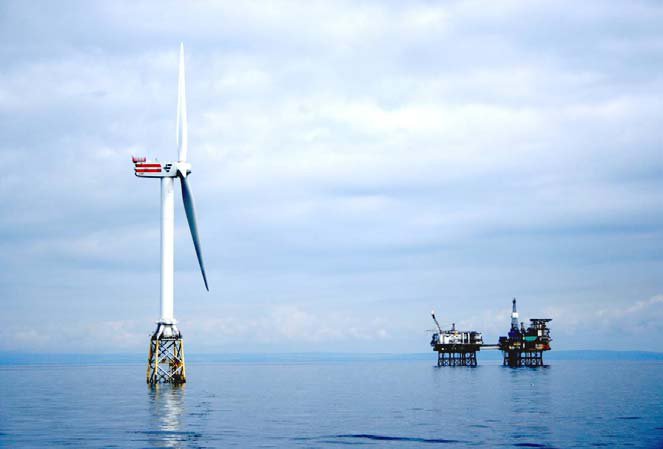
Oil Platform over depleted field sprouting a 5 MWe wind turbine off the coast of the Netherlands. We could easily be doing this off the coast of Louisiana.

UPDATE- I wanted to post more this morning, but was trying to get to work on time.

Here's a bit more:


Why Dick Changed His Mind. Cheney used to be fairly well grounded on foreign policy. What changed his mind was his belief that Peak Oil was imminent and the only way for the US to be successful in the 21st century was to control the largest supply of untapped oil (he thought, Iraq).

During the big push for offshore oil drilling over the summer, I heard some absolutely ridiculous claims about possible reserves off the eastern seaboard. I've come across a couple of scientific studies of the VERY limited drilling that occurred off the Jersey coast.

This article talks about uneconomical gas reserves found in the Baltimore Canyon. Also nice to read because of the discussion of Mukluk.

This is a (dated) but detailed study of the geology of the Baltimore Canyon. Baltimore Canyon won't have anywhere near the oil as, say, Mississippi Canyon or Cantarelle or other big GoM formations, but there's some promising territory there. I'd love to see what modern seismic could do. Just the subsea imaging alone has come a long way. That being said, there's no guarantee that oil found will be developed. All support infrastructure (pipelines, compression facilities, supply ports, etc.) would have to be built from scratch.

3 great photos of the drilling rig replacement operation at Shell Mars TLP. The scale on these photos is hard to wrap your head around, even when I've walked around the deck and peered up that the drilling rig. To think it got lifted up like that is amazing.

Friday, April 10, 2009

White Collar Crime

I can't post the clip (thank you, Viacom), but there was a great episode of the Chappelle Show where they contrasted the treatment of blue collar criminals with white collar criminals, except in the sketch, they were flipped. The ponzi-scheme mastermind had his home invaded by machine gun toting police, his dog was shot, his wife and kid dragged out of bed, and he was badly beaten before being thrown in central lockup in his underwear. The drug runner (played by Chappelle) was hauled before a Senate subcommittee, asked questions (very courteously) by the senators, and he took the fifth, or in Chappelled case, "I take the fif."

Well, white collar crime does a hell of a lot of damage to this country. Look at the huge mess in the financial world, much of which was caused by blatantly illegal acts. Here are a few episodes of white collar crime that stick out.

Lawyers are "Life Support" for organized crime. Related:
Defense Lawyer Charged With Witness Tampering
. More lawyers should see the inside of prison, and I don't mean visiting clients...

Joe Cassano peers out his spider-hole. Looks like the Feds are homing in on the dude that was chronicled in Matt Taibbi's piece. Exiled suggests he have his teeth removed, so they're not punched out for him in prison (I'll leave it to your imagination to figure out why).

Papers Show Wachovia Knew of Thefts - New York Times. Wachovia aids telemarketing fraudsters because of lucrative fees... Related (?): 24 indicted for mortgage fraud ring. Wouldn't be surprised if it turns out the banks didn't check these mortgage applications as closely as they were required to, because they the bank got to bundle up the fraudulent mortgages into a mortgage-backed security and make a boatload of money selling it to pension funds, Chinese investors, etc. Suckers! More related: "Very clever."

Morgan Stanley's 13% Payout Offer To Short Ford Stock. MS using taxpayer funds to short Ford, the only domestic automaker still hanging on strong (at least for now).

How helpful are your bankers? Well, try banking with UBS. Their so helpful, they'll even smuggle diamonds in toothpaste past the TSA for you. Now, many UBS clients are facing huge IRS fines and possibly even jail time for willful acts of tax evasion on a massive scale. Some of the tax evaders are crying their eyes out to their lawyers. Bo-hoo. Fuck 'em.