Showing posts with label Energy. Show all posts

Saturday, August 20, 2011

Link Dump - 20 August 2011

Crime:

People tend to overestimate their own intelligence. Funny story at the beginning of the article.

There are other articles out there that are better on one aspect of it, but this is by far the best overview of the spread and damage done by the Stuxnet worm.


Gives some great perspective on how the Wikileaks Afghan War Logs got leaked. Also, nice to read the unedited logs to get the whole perspective (although it takes some skipping around).

Anthrax killer still unknown?
FBI mucks up the case yet again.


Lee Zurik is lazy
So sez Aaron Bennet


Original article. Well worth a read. Great investigative journalism.


Economics:

Answer: get some practical experience. In the US for engineers, the Senior Project is looked at very closely by employers.


China seeks to displace Korea as the king of the shipbuilders. Korea will start concentrating on higher-value ships (LNG tankers, for example) as China's government pumps money into the shipbuilding industry to build capacity.


Note the article focuses only on Mexican immigrants (not other Latin American countries). Economic progress and less corruption keeps Mexico's best and brightest home.


Discussion of choosing between technical track and managerial track positions. I don't necessarily agree with everything that's presented in the article, but the comments at the end are also good.


Shocking article. Also mentions the USCG/MMS hearings in New Orleans.


Energy

Also check out the 'Chats with nuclear dad' on the Georneys blog. A PhD candidate in geology interviews her nuclear engineer dad on Fukushima and other nuclear topics.


Lots of the early missions are still classified (NRO/NSA satellite launches, mostly) and there were some incidents that were never widely known.

Young Men and Fire
The Practical Pyromaniac, reviewed by Adam Savage


Retrain Shuttle workers to inspect Offshore?
Not as crazy an idea as it soundsh


Note that many major oil companies have negative reserve replacement ratios and don't even have a plan to reverse that trend; they'd rather live high on the hog on booked reserves. If you look at oil patch history, on the long run, it's cheaper to find and book barrels today rather than wait until tomorrow....

Squirrels changing trees: Republican edition
MMS tuns to BOEMRE. Now it's BOEM, OESS, and ONRR.


If I ever become dictator, everyone will drive stickshifts. It will stop distracted driving, lower energy consumption (and hence oil prices), and be safer.


From the Houston Chronicle, with hilarious appeal to 'stop sending us those crazy emails'


War:
A history of the Littoral Combat Ship


Syrian soldier's view on being ordered to shoot at his neighbors.


Politics:

For lesson in shared sacrifice, send Congress to boot camp - CNN.com
Lt. General Russel Honoré thinks Congress should be sent to boot camp: "Put them in tents with no air conditioning, have Army drill sergeants teach them teamwork and physical sacrifice. When they recognize their responsibility to the people of America, they can return to D.C."


List of books read by Obama over the past ~2 years.


Tuesday, May 18, 2010

Deepwater Horizon / Macondo Blowout - Links

I've been a little hesitant to post anything about the Deepwater Horizon/Macondo Blowout. I tend to work on things from the Christmas tree up, but here are a few things to peruse for starters:

The Oil Drum has had some fantastic coverage of the blowout. Probably the best single website when it comes to clear, concise, timely, technically accurate coverage (although RigZone has been pretty good, too).

P.E. writes about about working on rigs and pulls from his vast experience to offer his thoughts.

In the end, the document that should be the most read is the Coast Guard/MMS Board of Inquiry findings. Here's the one for the Ocean Ranger [PDF]. While we can make some very good hypothesis about the technical causes of the blowout and what could be done better to protect the environment and personnel, remember to keep an open mind until all the data is in, especially when the Blowout Preventer is pulled and carefully analyzed on the surface.

60 Minutes. The 60 Minutes piece on the Deepwater Horizon is well worth a watch. It fills in a few holes, but remember it's just a few pieces in the giant puzzle of what went wrong (and for a disaster of this magnitude, there's many, overlapping modes of failure).

Here's a couple of my old posts worth a read, too:
Engineering Disasters: The Demise of the Ocean Ranger

The Offshore Imperative

________________

UPDATE- MMS engineer warned of the danger of deepwater blowouts in 2009. Note that the odds of a deepwater blowout were calculated to be roughly 1 in 400 chance; that's about the same as a Category 5 hurricane destroying our crappy 100-year-level storm protection...

Oil Reaches Shore - Boston.com's Big Picture

Saturday, January 9, 2010

News and Notes - 9 Jan 2010

It's damned cold outside. The thermometer on top the local charter school is still reading in the mid-20's. Here's some reading material for you as you sit around your house clutching your hot beverage of choice trying to stay warm.

College Football Coaches Face the Summer of '69. Fantastic article going through some college football history. About how coaches lost their dictatorial power and the racial struggles at the end of the 60's.

Very long David Simon interview. Worth a read. Can't wait until Treme.

China's Energy Solution: Ignore the Cost. China plans massive buildout of alternative energy, whatever the cost. China is forcing public utilities to buy renewable power at cost + fee basis. While "communist"-sounding, might actually be quite capitalistic by breaking the biggest logjam in financing and construction of new wind, etc. projects. Alternative Energy companies have a hard time securing financing due to the massive fluctuation in energy prices. Almost all alternative energy projects (wind, solar {very useful for peak power}) are economical at least SOME of the time. The trick is when energy prices collapse, they're left trying to pay off a massive initial capital cost. Cost overruns probably won't be that bad because the energy companies still have to front the money.

What's driving up oil prices (now above $80 on all indexes {WTI, Brent, Tapis, etc.})? Well, according to this article, it's the LACK of speculators.

Aldous Huxley vs. George Orwell.

The Nightmare Life Without Fuel. Essay from 1977 by Isaac Asimov. I've been getting into a lot of classic science fiction writing recently and Asimov's stuff is really good and holds up well over time. I got more of the Foundation series for Christmas.

Drew Brees: Pro-Bowl Quarterback, New Orleans-lover, Philanthropist, and Washington Post Op-Ed writer.

And here's the best articles for last:

Village will not be moved. Isle De Jean, like many other small Cajun towns south of New Orleans, is slipping into the Gulf, but residents refuse to leave. Great read.

Recession fuels shift to public schools.
"Public schools play such an important role for our democracy as the only institution that serves all children," he says. "If you lose the people who have the power of choice because they have the resources and the information and the time to make a difference, it becomes a system that only serves people who have no other option. And that's a problem."


Profile: Hussain al-Shahristani - Times Online The most important man in the Middle East that you've never heard of. Tortured for 10 years at Abu Gharib, he's now the incorruptable man in charge of Iraq's oil. Reminds me of reading about Zaki Yamani in Saudi Arabia. Related: Oil Drum discussion of potential Iraq oil production capacity. Lots of caveats, but there's potential for a Russia-like situation to develop (poorly managed large fields turned over to IOC's with Superstraws resulting in a "new Saudi Arabia" almost overnight, thanks to lots of hard work. The photo near the end will bring a smirk to your face, too.

And ending with something fun: Looking for a way to stay warm? Try this:

Wednesday, October 7, 2009

Pelican State Oil

Matthew Simmons is an author and energy investor who happens to give some pretty good presentations. I noticed a new one that had some very important fact I'd like to highlight.

Here's the Presentation [PDF]. It was put together for Acadiana Business Magazine and is all about the Louisiana's oil industry.

As I've pointed out before, there's a huge amount of infrastructure off the Louisiana coast. At least $100 billion dollars in offshore infrastructure. Simmons points out that offshore is the most important "Parish" in the state. The heart of Gulf of Mexico Oil production is in South Louisiana. All of the major support bases and logistical centers, as well as the pipelines and a good chunk of the refineries are in Louisiana.

There are a couple of slides I'll steal that I think are important because they illustrate a point far better than I can in words:

Production Scorecard, From Matthew Simmons

One of the realities of offshore fields is their incredibly short lifespans. They are incredibly prolific for a couple of years and then the pressure gives out and the field depletes. Cognac peaked at 72,000 barrels/day 5 years after first oil. 10 years after that it was 17,000 barrels/day. Today, it's roughly 2,000 barrels/day. Since words don't really describe it as well as pictures, here's a few more slides I'll highlight:


NOTE: Curves from Simmons & Co.

What do the curves all have in common? Quick peaking fields with harsh declines (>10%/year sometimes, 4-6%/year is industry average). Because of that, 90% of the production comes from less than 10% of the fields. There are a lot of platforms out there that are only kept around because their abandonment costs are so high [not entirely true; a lot have extended leases on life thanks to subsea fields or pipeline stations for deeper fields]. Trace amounts of pollutants are one concern (see the Brent Spar for an idea of what I'm talking about), but I think the bigger issue is the hazard to marine traffic. The Gulf of Mexico has two of the biggest ports in the world (NOLA and Houston). Some of these platforms are only a couple thousand feet of major shipping lanes, which is like threading the needle for the really big, really unmaneuverable oil tankers and cargo vessels. There have been some minor collisions and some major near misses, but so far there's been no major accidents.

Another of his points I don't totally agree with: Louisiana's oil infrastructure is very old, which is true, but it tends to be pretty well cared for and Katrina was, in some respects, a blessing in that a lot of old equipment got replaced and upgraded. Rust isn't as big a deal as it could be. He raises the specter of having to rebuild or expand the LOOP. I've heard of the latter, but I've never heard of anyone saying the LOOP was rusting away.

One of the major subjective assertions he makes, that I happen to agree with, is that the demographics of the Louisiana oil industry, in terms of the aging workforce, might be the WORST IN THE ENTIRE GLOBAL OIL INDUSTRY. There's some young engineers that have been hired since the 2000-era boom and some old guys who survived the cutbacks in the 1980's, and almost nobody in the middle. Not a day goes by without more older engineers going into retirement. A company can keep a stable headcount, if you're lucky, but you'll never be able to keep the experience and talent level the same. The oil industry is paying a price for firing so many workers at the end of the oil bust. The business people thought the Gulf was a "Dead Sea" and these workers would no longer be needed. Oops.

Louisiana's oil industry has had several obituaries written for it, but it's not dead yet. When things are said and done, Louisiana will still be playing a major role in bringing energy to the nation, no matter what form that may come in.

Wednesday, September 23, 2009

"Oil that is, black gold, Texas tea."


UPDATE: More links to add.

Help! They Can't Find Any More Oil!

International oil and gas companies increased exploration spending by 21% in 2008 to $492 billion, but worldwide oil and gas reserves were .4% lower by year end. There was a 4.4 billion barrel decline in oil reserves. This isn't a singular event, either. Over the past three years reserves have been flat.

Related: FT.com | FT Energy Source | Finding new oil gets ever more expensive ...One significant finding of the study: in the US, reserve replacement costs more than doubled [in a single year].

Sunday, April 5, 2009

Oil drips and discharges - 5 April 2008

Oil industry narrows focus on deep water. This is bad news for Louisiana. Deepwater Exploration and Production was THE hottest area in the oil biz for the past decade and Louisiana was a big beneficiary of that. Little coastal cities like Morgan City had a sustained boom coming from well-paid oil service workers. Now, it's dropping off a cliff. The oil companies are cutting way back and the service companies are taking the brunt of it. I've heard that the oil service companies have taken a lot of their workers, who had been working 80-hour weeks [paying them handsomely in the process] and cutting their hours down to 32 hours a week. I've heard some service companies complaining it's just the majors trying to squeeze lower rates out of the service companies. Others claim it's fear of what sort of taxes Obama might place on the oil industry. Dunno, just know it looks bad. Morgan City used to have the lowest unemployment rate of any city in the country. Give it a year and I guarantee that won't be true.

Not only will Louisiana start getting hit with lower employment, but lease sales are getting colder and colder. These lease sales are critical to plugging the budget gap and financing coastal restoration. Keep in mind a lot of companies have been sitting on unused leases, so there's little incentive to splurge on new lease sales.

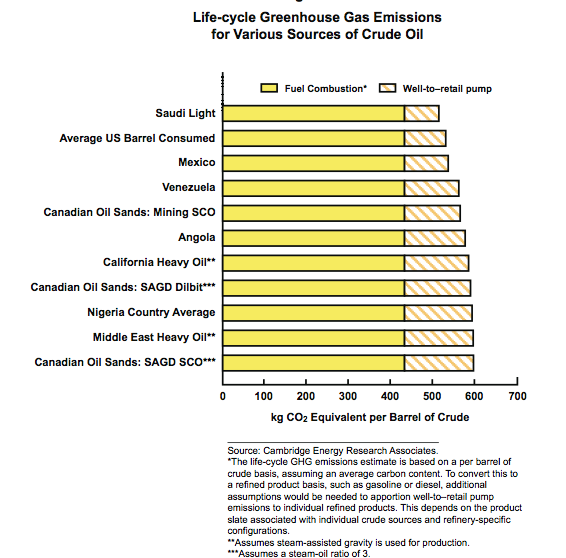
A lot of people are pinning their hopes for "energy independence" on the Canadian Tar Sands. Couple of interesting pieces: Two Canadian Giants merge in an effort to cut costs. National Geographic just ran a huge expose on the tar sands operation. Here's a good roundup of the reactions and articles. Worth clicking through to read a few. Lots of jobs, but at a staggering environmental impact. Don't forget that any increase in oil production will depend on 2 things: cheap heating of steam (through natural gas) and large volumes of water, way beyond what they have access to right now.

Other quick hits:
Why oil prices will rise again. Underinvestment will lead to an energy crunch when the economy gets back on track.

Latest fashion craze in Iraq: buying civilian Hummers. H2's and H3's in bright colors are all the rage. Oh, the irony. On a serious note, rising internal consumption cuts off future oil exports. Keep that in the back of your head...

Volcanos and Oil: a bad combination. Somebody send a memo to Chevron. CC Bobby Jindal.

Why did oil hit $147 a barrel then crash? It might be because of a Goldman Sachs short squeeze. Note to those that want to "blame the speculators" on the entire run up on prices: the short squeeze didn't start until oil was more than $100/barrel.

Friday, January 23, 2009

Pollution is resource in the wrong place

Going into the future, I think we'll have to be very inventive about our usage of natural resources. Fewer rich sources of energy and resources will be out there, so we'll have to find inventive ways of using what we have and extracting what we need from lesser grades of material.

Also, it will get harder and harder to clean up big environmental messes.

Recently, I heard this axiom:
"Pollution is resource in the wrong place"

I have no idea who said that, but it's very wise. So wise in fact, that I have a feeling this might be the next big thing.

Here's a few way I see it put into practice.

Butte, MT Open Pit Mine. An abandoned copper mine builds up water contaminated with all sorts of nasty chemicals and metals. It became one of the largest (by size) Superfund sites in the US. Right now, though, the mine has reopened using new methods to leach metals out of the water and clean it up (also making a profit off the extracted metals). Extremophile bacteria also helped clean up "The Pit." Researchers studying these bacteria have invented new cancer drugs from them.

Another example of beneficial use of "waste" resources is beneficial use of dredge material for coastal restoration in Southeast Louisiana. Rebuild the wetlands while maintaining the port.

Fly Ash has been in the news because of the spill. Fly ash is what's leftover when you burn coal for oil. The TVA spill happened because it was being stored in big ponds that just got bigger and bigger and bigger. Well, fly ash does have an actual use. It's been used as a cement substitute in concrete mixes. It was first used as such in the Hoover Dam. The manufacture of cement is extraordinarily energy intensive and has a HUGE carbon footprint.

Also related to fly ash is the huge amounts of entrained thorium that could be used in thorium-fuel nuclear reactors. A very interesting and very promising emerging technology. The science behind thorium power is very interesting, there have been multiple successful test reactors, and I plan on doing a post about it soon.

Here's to "waste not, want not" for future energy and resource sources.

Wednesday, August 13, 2008

News Buffet - 13 August 2008

Got a few things that have caught my eye lately...

China houses 10 MILLION quake survivors in temporary prefab housing. FEMA could barely handle a hundred thousand or so.

On the military:
The Pentagon as global landlord. Some interesting statistics about the Department of Defense.

The Caleb Campbell Story from Deadspin. Very serious journalism out of Deadspin. Good work.

Greatest Twitter Tweet Ever. No other way to describe it.

On the economy:
Joyous that oil prices have been going down? Don't get too excited yet. A lot of it is due to central banks and the Fed propping up the dollar. A moderate sized intervention has a widespread effect, given how over leveraged most players in the market are.

How the rich think about money. God bless British journalists. They have to do this with ridiculous libel laws. I dare any American journalists to get something like this published.

Some property news:
Section 8 moves to the suburbs.

In New Orleans housing market, Uptown shines while St. Tammany takes a bad hit.

A portrait of the true victim of corruption. From our Karen Gadbois.

Politics:
GOP drops like a stone in voting rolls ...Except in Louisiana. Even Kentucky is smarter than us.

"Principaled conservatism out of Baton Rouge" HA!

On Energy:
The Dark Side of the Toyota Prius. Suck on this smug hippies: you Prius is soaked in the blood of slave laborers!

Great map of the Gulf of Mexico with infrastructure and lease blocks. Be warned, very big PDF file. Unless you work out there, people don't realize how much infrastructure there is offshore.

Chuck Schumer is about the last person you want to listen to when it comes to energy. He wanted to tap the Strategic Petroleum Reserve as, "world oil prices continue their meteoric ascent to nearly $25 per barrel. "

LA Gangs Experiment with Pedal-By Shootings. Reducing your carbon emissions? You know gas prices are getting bad when...

On Evolution:
Tech geek takes on creationist in Kansas. I kicked into his campaign.

Colleges allowed to refuse admissions to students who have creationism in their science classes. Good. Maybe when little Johnny from Mandeville High gets turned down for Columbia, then Louisiana parents might get what Jindal's stealth creationism bill means in the long term to Louisiana. Also, I just realized we have a Louisiana Science Coalition. Anyone a member? How can I sign up?

Saturday, June 28, 2008

The Difference...

Asked what the gravest threat to the economy is:

McCain:
"Radical Islamic extremism."

Obama:
"Our energy policy ... demand is clearly outstripping supply."

One gets it. The other doesn't even try.

Thursday, June 26, 2008

The start of a real energy plan for this country

I blog about Oil a lot because it's what runs the economy. I don't have anything directly to do with the oil industry anymore, but it's the foundation of American wealth. Read The Prize to know what I mean.

Four dollar a gallon gas is getting a lot of people steamed and I don't see many worthwhile ideas out there, so I'll throw out a few I think will work. All are based off current technology and have the most bang for the buck.

Here is what I think is the first step towards a real solution on energy. A lot of it comes from The Oil Drum and a local light rail proponent named Alan Drake.

First off, what we're dealing with is a result of supply and demand. Quit blaming the speculators or environmentalists. The crisis isn't going to go away anytime soon, either. Get used to it. 99 cents a gallon is never coming back. Prepare for a long, painful slog. There are no golden bullets that will solve the problem, but there might just be a few silver BB's out there. UPDATE 2- I think the market WILL come up with a solution. You just might not like it. Therefore, we should try and make the transition on our terms instead of having it forced on us. You have the luxury of complaining when there are options. Don't expect too much sympathy when we run out of options.

My first suggestion is develop a worldwide database of inventory and consumption data. Real time, streamed over the internet, if possible. Most oil pricing is done by the EIA calling up refineries around the US and figuring out what % output they are operating at, coupled with their inventories. Let's replicate this on a global scale. Markets thrive on information. More information will smooth out the peaks and the valleys. This will take a lot hand holding because, while everyone wants the data, but nobody want to reveal anything potentially embarrassing or giving a competitor an advantage.

Second, go electric rail. Electric, long haul freight can replace millions of barrels a day we burn on running 18-wheelers. Also, electrified light rail (like streetcars) should be built in a massive infrastructure build out akin to the original interstate system. An integrated system of streetcars and "inter-urbs" would cut demand by millions of barrels. Also, it's established technology that can be built surprisingly quickly (look at the streetcar boom in New Orleans and elsewhere during 1900-1910). Make the federal/local contribution level 90/10 for light rail and 50/50 (or 40/60, etc.) for highways and watch the transformation take place. UPDATE 2- Here is a white paper written by Alan Drake breaking the problem down.

Shrink cities. Eliminate mortgage write-offs for suburban houses too far away from the core. Turn old suburbs back into local farms for city.

Allow people to avoid rush hour traffic. A Prius gets 0 MPG stopped in bumper to bumper traffic. Wherever possible, allow 4 day work weeks. Encourage businesses to allow more workers to telecommute, at least on some days. You'd be surprised how many jobs could be shifted that way. You'd save another million barrels a day just keeping people from getting stuck in traffic.

Revamp refineries to process heavy crude. (Already happening in Texas and new refinery in North Dakota). Most of the new production will be heavy, sour crude instead of light, sweet crude.

NO MORE WARS! Nothing will drive up the price of oil like another resource war. Iraq has totally discredited the idea you can use the military to acquire more oil. There are too many things that can go wrong and oil supplies are too easy to sabotage (Saddam injected fuel oil into Rumalia to screw up US).

When it comes to ANWAR and the Outer Continental Shelf, drill them as late as possible, while still having existing infrastructure there to support it. Wait too long, must rebuild Trans Alaskan Pipeline System. Too soon is a complete waste. Should be used as "methadone" to get us off of our addiction, instead of feeding the habit. It will also shut up the "drill ANWAR and solve all our gas problems" buffoons.

My favorite idea: $1 a gallon gas tax, but $0.75 goes back in the form of a tax break. The remaining $0.25 is for electric rail and other mitigation strategies. $1 a gallon for 1,000 gallons a household (diesel + gasoline). Bump it up $0.33 cents every 4 months, with a $250 rebate sent each boost. Numbers are a bit rough, but I think they're in the ballpark. Encourage people to take the initiative. Encourage individual responsibility.

All of this is to be done with established technology. No "golden bullets." Put money into research, but there's no way to tell exactly what might come out. Remember, Penicillin was an accidental discovery. The first diesel engines were novelties that ran on peanut oil. No way to tell exactly what might happen. Best course forward is to encourage scientific thinking in everyone, not just scientists and engineers, but laypeople as well. Who knows? We might have a breakthrough in cold fusion or zero point energy. Don't bet the farm on it, though. The Manhattan Project was the exception, not the rule.

NOTE- I plan on adding links and fleshing this out later. It took a while to write, so I'll just throw it out there and worry about backing up specific points later. If you think part of it's bullshit, let me know and I'll get around to that specific part sooner rather than later.

UPDATE 1- Oops. Forgot to mention insulation of homes. $2500 to add insulation to an existing home has a ridiculously low payback period (2-3 years) and is your most bang for your buck.

Wednesday, April 2, 2008

Oil drips and discharges

There is no gas shortage. While this author makes some good points, he has some enormous holes in his arguments. He confuses oil inventories with gasoline inventories. Also, while gasoline is at a 15 year high in terms of absolute numbers, in terms of days of supply, we're not doing nearly as well. Days of supply are how many days we could run our cars without any new refining until we ran out. It takes into consideration consumption, which is much higher now than it was in 1990. Also, as much as people's eyes pop at the profits the oil majors are making now, it wasn't too long ago they were just hanging on. In the late 90's, when gasoline was 99 cents a gallon (partly as a result of Venezuela fighting for market share), companies were laying off workers and just barely hanging on. After the oil bust in the 80's, 1/3 of the entire industry lost their jobs! I still find if fascinating that the old timers I deal with are thinking 'when is the bubble going to bust' and not 'wow, we're making a lot of money.' The oil bust of the 80's is still deeply ingrained into the psyche of oilfield workers.

Artic the next Saudi Arabia? I doubt it. The most famous prospect in the Arctic is Mukluk. Mukluk is INFAMOUS within the oil industry. It was considered to be a "sure thing" and when the exploration rights were put of for auction by MMS (Federal Government), the bidding exploded. BP spent a billion dollars (back when a billion dollars meant something) to drill a dry hole (no oil). Other companies couldn't believe it, so they went in and drilled more dry holes. No oil was ever found. Here's a different geologist's take. Much more realistic. Nice little factoid at the end, too.

Japanese government paid for 100% of Prius' hybrid drive development, ex-VP alleges Toyota says Jim Press is full of shit. The truth is somewhere in the middle. Japan takes their engineering research very seriously. They spend boatloads on research that could be useful in the near term on what is usually referred to as 'application engineering' (my half-assed definition: applying known technologies in combination to get stuff done).

40% of Spanish electricity comes from wind. 40% of electricity production met by wind energy in a major industrial country... Wind has serious potential and is the most economical of all the alternative energies. That doesn't mean you can completely do without base load stations, but nobody can claim wind is useless. Don't forget about solar, too. Especially solar thermal. Solar power provides peak power (electricity at mid-day, when demand is highest), which makes it even more valuable. Solar power is a long way away from being economical for base power generation, but because peak power generation is so expensive (it's usually achieved through natural gas powered turbines), it is starting to be economical for peak power generation, even without subsidies.

Friday, February 8, 2008

China's been busy

While everyone on this side of the Pacific is concerned with Bush/the Economy/Briney Spears/Iraq, China has been busy, and not just in preparation for the Olympics.

On the military front:

China has built itself the 2nd largest submarine fleet in the world. Larger than Russia. Including quiet, nuclear powered and even a few boomers [ballistic missile submarines].

Gone out and outfitted a Russian aircraft carrier and named it the Shi Lang (the last Chinese emperor to invade Taiwan). The story of the Varyag is absolutely fascinating. It was bought by a front company while it was being scrapped by Ukrainians. The cover story was it was going to turned into a floating casino in Macao (despite the fact the harbor is too shallow for a deep draft vessel like a carrier). It then had a long, interesting journey across the globe (bypassing Macao) and ending up in China's largest naval shipyard, where it's been refitted and painted PLAN [Chinese navy] gray. Varyag-World has been covering this story in great detail for some time. If you liked reading Blind Man's Bluff, you'll love reading Varyag World. It's still being updated.

China, nervous about US military activity all around them, denies US navy ships shelter during storm.

Chinese interests are seeking to buy 3Com, one of the primary suppliers of US military secured-communications equipment. 3Com is just one of many companies the Chinese are taking an interest in.

On the environmental front:

China has passed the US as the most polluting country in the world.

The Yangtze River dolphin has gone extinct.

Beijing's smog has gotten so bad you can't see across the street. That'll look great on the Olympic broadcasts.

Speaking of the Olympics, athletes are bringing their own food because the Chinese food has so much steroids, the athletes will test positive from eating the chicken.

On the energy front:

China doubling oil tanker fleet. There are now so many oil tankers pulling up to China's coast, there aren't enough places for them to dock.

1 year ago, China became a net importer of coal. In December 2007 it imported 4.3 million tons of coal. The US is the "Saudi Arabia of coal" and 4.3 million tons would be 1/3 of monthly net exports.

China freezes energy prices in an attempt to deal with a severe diesel shortage. China has been subsidizing energy costs to the tune of $15.7 billion for their steel industry alone. Just imagine if Blanco told Krupp, 'we're going to pick up half the bill for your energy.' Krupp would have been here in a heartbeat. Just imagine the sort of unfair competitive advantage that gives Chinese companies...

On the economic front:

Speaking of competitive advantage, how's tortured slave labor for y'a? Up from your bootstraps you fat, lazy, unionized worker!

Major banks rescued by China's sovereign wealth fund. "The idea of China rushing to the rescue of the capitalist world seems so unlikely as to be unbelievable."

China's only going to do so much, though. They are quietly revaluing the yuan. Part of it is an effort to decouple from the US economy. Part of it is to fight inflation in the major cities that's fermenting unrest. Remember, runaway inflation was a factor in the Tienanmen Square protests.

Unlike the author of this what if scenario [Bush refuses to give up power in Jan '09 and Chinese invade], I don't think China's a threat to the US, but we're stupid not to pay attention to them. I think China's economy is going to overheat, pollution will get so bad not even Fox News could content the people, and the 4-2-1 problem will lead to a social security crisis that will put ours to shame will combine to lead China to focus more on internal problems than stepping up to take a leading role in a multi-polar world.

Wednesday, February 6, 2008

Sleepwalking into the next energy crisis...

I've done a lot of work for the energy sector and ever since reading The Prize, I have taken a keen interest in oil-related events. Oil is the fuel that drives everything we do. 95% or so of transportation fuels come from oil. Without it, trains, planes, and automobiles (even smugly-driven Prius) grind to a halt. People have no idea of the importance of a single gallon of gas (500 man hours of labor) and how CHEAP it still is (less than 20 cents a cup; a fraction of what your morning frapa-whacka-chino costs).

The first target of everyone's ire is the Oil Majors. Chevron, ExxonMobil, Shell, BP and ConnocoPhilips are refered to as the International Oil Companies (IOC's for short) within industry. This is who Joe Blow sees whenever on the sign when he fills up his DoublewideTrailer with 22" rims SUV. What he doesn't understand is less than half the oil he's about to pump comes from the IOC's. The other half comes from Nationalized Oil Companies (NOC's) like Saudi Aramco, Mexico's PEMEX, Venesuela's PDVSA, or Norway's StatOil/NorskHydro. In order to provide the consumer with enough gasoline, the IOC's have to buy from the NOC's (at retail prices). Because the consumer is such a cheap bastard when it comes to buying gas (people will drive all over town to save a nickel), the price of gas hasn't kept up with the rise in crude oil prices. In addition to SEC regulation preventing exploration and production divisions of IOC's from sharing profits with refining divisions, the oil companies are getting crunched. BP is cutting 5,000 jobs.

Everyone's eyes widen when they hear Exxon makes more than $1,000 a second in profits, but what they don't see is the oil industry is the most capital intensive business out there. The capital costs are so high, you damn well better be making lots of money!

The most serious threat to the IOC's, IMO, is the critical shortage of talent. Personnel costs have skyrocketed. Most new wells are extremely deep (15,000+ feet) and need weeks to drill at rates upwards of $250,000 a day. Drilling costs doubled from 2003-2006, driven largely by personnel costs. It's hard, but not impossible, to get your hands on a drilling rig. Keeping it fully staffed with experienced crews running 24/7 is damned near impossible. Salaries have exploded as a result. Houston, the energy capital of the world, has become a town of mercenaries; people just leave after 3 months because they get an extra $1.50 an hour. That's been going on for the past 2-3 years now and salaries are up 50-100%. For the companies, it's only going to get worse. I can't find it now, but I remember reading that 50% of one of the IOC's geology and engineering staff will be eligible to retire by December 2009. New projects get more and more complicated with fewer and fewer engineers to work on them. Demand for engineers is going up 40% per year with no end in sight. Just imagine how desperate companies are going to get to retain talent then. It's great for individuals, but it's sapping the industry's ability to get shit done. Projects keep missing deadline after deadline.

All the efforts of oil companies can't even replace the oil they're pumping. The oil companies are running flat out just to stay in place, and even then they are slowly sliding backwards on the treadmill. Chevron only replaced 10-20% of its reserves last year. If that doesn't change, then Chevron (and all the other IOC's) will eventually cease to exist.

Well, what about Saudi Arabia? Aren't they sitting on oceans of the stuff? No, even Saudi Arabia's oil reserves are limited (and might be more limited than anyone thinks). Our idiot president accidentally (or not?) dropped Saudi Arabia's biggest secret on national TV and nobody in the press was smart enough to realize what he was saying...

The US is slowly but surely heading into an energy crisis that will put the 70's oil embargos to shame. It's been coming for 50 years and, though quite a few people have known about it, little has been done to prepare. This nation hasn't had a coherent energy policy since the Carter administration. Well, one way or the other, the next president will have an energy policy that reduces American dependence on oil.

NOTE- The last real oil shock happened before I was born. I only know a little about the oil bust that hit the energy sector in the early 80's. Anyone got any memories of the 70's oil embargo's? I'd love to hear them. Everyone I've talked to seems to have blocked them out of their memory...

Tuesday, November 27, 2007

Energy News

The Dirty Green Energy Solution. This isn't pie in the sky stuff. It's a very simple, down to earth solution to reduce our energy demand, reduce our dependence on imported oil, and save the environment. The industry terms for what they talk about are CoGen and WHRU's. I've had some exposure to them at work and they work extremely well if you set them up right. The biggest thing holding them back is high initial costs (defrayed by later savings, though) and energy regulations. You might say, well, give tax incentives and deregulate, but remember Enron was a child of the deregulation movement. You've got to be careful how you do it.

Bloggers visit Shell Brutus TLP. I'm absolutely shocked they didn't comment on the food. They did comment on the safety program, which is impressive. Every morning, there is a meeting about safety. The first thing people do is read off all the observed safety issues (usually not wearing proper PPE). Violators are never punished and reporters are always recognized. Those incident reports (near misses, etc.) are fed back to the training facilities who then emphasize whatever seems to be lacking. And then it's time for breakfast. Did I mention the food is really good?

Cheney on the economy. What I found interesting: The budget guys pushed back: Can't we wait until crude prices level off? No, the word came back from Cheney, this was urgent. That was all it took. "He doesn't weigh in on a ton of issues," said a person close to those negotiations. "But when he does... SPR has been the one thing the current administration hasn't played politics with and I applaud them for boosting capacity and installing some very competent people at the top.

Robert Hirsch lays out various oil production scenarios [PDF] Gives you an idea where oil production might head.

Monday, October 8, 2007

Odds and Ends - 9 Oct 2007

Sorry about not posting for a while, but I've been a bit busy recently. Here are some internet finds:

Matt Taibbi pens the eulogy for McCain's campaign. Excellent, if a bit sad. I always had a soft spot for McCain. Oh yeah, and if you haven't read Taibbi's obit for Yeltsin, look through his archives and read it. It's the funniest obituary ever.

Louisiana: the #1 most corrupt state. We're #1! We're #1! In a few more years, we'll have an insurmountable lead, thanks to Jim Letten and all the Katrina money.

Scandal brewing at Oral Roberts. Corruption in higher education. This story has some juicy details! The female university president was Sugar Momma to a lot of college boys...

Buckets of money being poured into deepwater oil exploration. This is good news for Louisiana, because these will be the blocks whose royalties pay for coastal restoration in a little under 10 years.

War Without End, Amen. All about the geopolitical nightmare unfolding between Saudi Arabia and Iran. One scenario is a nuclear arms race between the Saudis and the Persians. And that's the GOOD scenario... Also, Spot On seems to be a decent rag (along the lines of Alter-NET.

Photovoltaics: from waste to viability. PV panels are slowly, but steadily becoming more than a marginal power source for out of the way areas. I'm impressed. This should be one area where technology comes through in the clutch.

China Evacuates 1 Million Ahead of Storm. Wonder what would happen if the Chinese Government let 1 million people drown in a tropical cyclone? The pitchforks and torches would get some use...

When it comes to energy efficiency, Britain is EVEN WORSE than the US.

Is it just me or does the elephant have a wide stance? - ZING!!! Also, that star makes the elephant look like he has X's for eyes...

Women used to earn 68 cents for every dollar a man earned. Well, now Giuliani is only making 40 cents for every Hillary dollar.

US experiencing engineer shortage. According to the article, the US oil industry will experience a net shrinkage of 1-4% per year of its talent base.

Very long, detailed article about Saudi Arabia's future as an oil producing nation. A bit technical at times, but I like technical.

I get a bunch of industry magazines at work and the last issue of Oil and Gas Engineer caught my eye. It's cover story is 'the search for the next trillion barrels of oil.' In order to meet growing demand, the oil industry will have to find another billion barrels of oil. For perspective, that's another 3 Saudi Arabia's and some change. If this article is to be believed, petroleum geologists believe we'll only find 25% of what we need. What does that mean? The price will go up and we'll have to make do with less. A 70's-style energy shortage within the next 5-10 years is highly probable, even if the Middle East stays relatively stable (and that's a big if).

And, last, but not least: Ron Paul: the Howard Dean of '08? Hopefully, this will be a "narrative" that allows the media to finally give Dr. Paul the coverage he's proven he deserves. As an aside, this country needs 2 functioning political parties. That's been the problem during the W years. Here's the way I see things shaking down: Ron Paul gathers a dedicated base, he surprises everyone in the primaries. Someone else wins the nomination (and then is slaughtered by Hillary), but Ron Paul gets into a leadership position and rejuvenates the Republican Party the way Howard Dean did for the Dems. Remember, Dean's 50 State strategy was CRUCIAL to the Dems taking over both houses of Congress in '06. Lots of people thought Dean was nuts and he was ridiculed for his strategy. One of the jokes was the Dems were sending people to Mississippi (or insert another staunch Red State here) to pick their nose for a year. Without Dean making a strong, but not too strong, appearance in '03/'04, you don't have the victories in '06.