Saturday, July 10, 2010


Monday, July 5, 2010
Tulane Law School to begin wholesale grade inflation
Tulane will now tack on 0.3 to every law school student's GPA. Apparently, too many recent grads are unemployed, so law schools across the nation feel like they have to give their students a helping hand. Above the Law has the details.
At least they're not stealing shoes anymore...
[Insert obligatory Cowen and Tulane Engineering comment here; I'll take your suggestions in the comments]
At least they're not stealing shoes anymore...
[Insert obligatory Cowen and Tulane Engineering comment here; I'll take your suggestions in the comments]
Saturday, July 3, 2010
P.E. Exam Application Status
Sorry the posting has fallen off a bit. I've still got a lot of studying to do.
My application to LAPELS is now complete and it's now "being reviewed by the committee. It takes 6-8 weeks, allegedly. NCEES registration starts on July 6th (Tuesday), but stays open until September. Right now, I'm waiting on LAPELS to give me the OK to register to take the exam. I'm playing a waiting game...
In the meantime, more studying. I'm going through machine design and I'm very glad I still have my old textbooks. Shigley's is fabulous. I've also borrowed Machinery Handbook from a coworker and I've found it really comes in handy. I wish I had bought that instead of Rourke's. It's much easier to find what I need in Machinery Handbook than Rourke's.
After all the machine design problems I've worked, I think I'll stick with either Thermofluids or HVAC for the afternoon section.
Treme vs. After the Catch
First off: Pistolette reviews Treme. Go read it.
I've been watching Treme and it definitely has its moments, but all in all, I'm finding that quite a few born-and-bred locals, including myself, are lukewarm about it.
------------
Contrast Treme's depiction of New Orleans with Deadliest Catch's "After the Catch". Let's be honest, while Treme is an artistic piece put together by HBO's premier 'auteur', After the Catch is a way for Discovery to milk a few more nickels out of one of the top products, but the results have been fantastic.
For those of you that don't know, this year's ATC is being filmed at the Blue Nile here in New Orleans. Here are some of the funny moments from ATC so far:
* Phil's sons (and all the other captains, as well) talk about New Orleans being the perfect fisherman's town ("The bars! They never close!").
* As opposed to Treme, which beats you over the head with New Orleans culture, ATC just sort of presents it and there it is, like the gumbo cooking segment.
* They had a Chalmatian shrimper on the show and he took Sig and Keith shrimping and, while they didn't catch a thing, they had a blast. What was amazing is Sig, totally unscripted BTW, was blow away by the fact that these fisherman have their house right on the water with the boat tied up by the back and go out shrimping for these big hauls in only 10 or so feet of water. Sig's feeling was, 'that's the life. What have I been doing wrong all these year?' {The obvious, 'Wow, it would be a shame if we lost this' was left for the audience to figure out instead of throwing the brick at them.}

* The same Chalmatian shrimper told the Deadliest Catch captains about surviving Katrina and about how being fishermen is a genetic disorder. While Treme is depicting New Orleanians as running around fucking everyone except who they're supposed to ("Do what you wanna...") with their "defective work ethic", here you have ATC presenting a real, heroic portraits of South Louisianians to Middle America in a way you can honestly be proud of. The guys from the Time Bandit praising Louisiana shrimpers is the best defense against bullshit like this: Michael Savage Calls the Gulf Oil Spill Victims Welfare Deadbeats.
Video of the Deadliest Catch captains being interviewed about their time along the Gulf Coast:
CNN Video
NOTE- Some minor edits after posting.
I've been watching Treme and it definitely has its moments, but all in all, I'm finding that quite a few born-and-bred locals, including myself, are lukewarm about it.
------------
Contrast Treme's depiction of New Orleans with Deadliest Catch's "After the Catch". Let's be honest, while Treme is an artistic piece put together by HBO's premier 'auteur', After the Catch is a way for Discovery to milk a few more nickels out of one of the top products, but the results have been fantastic.
For those of you that don't know, this year's ATC is being filmed at the Blue Nile here in New Orleans. Here are some of the funny moments from ATC so far:
* Phil's sons (and all the other captains, as well) talk about New Orleans being the perfect fisherman's town ("The bars! They never close!").
* As opposed to Treme, which beats you over the head with New Orleans culture, ATC just sort of presents it and there it is, like the gumbo cooking segment.
* They had a Chalmatian shrimper on the show and he took Sig and Keith shrimping and, while they didn't catch a thing, they had a blast. What was amazing is Sig, totally unscripted BTW, was blow away by the fact that these fisherman have their house right on the water with the boat tied up by the back and go out shrimping for these big hauls in only 10 or so feet of water. Sig's feeling was, 'that's the life. What have I been doing wrong all these year?' {The obvious, 'Wow, it would be a shame if we lost this' was left for the audience to figure out instead of throwing the brick at them.}
* The same Chalmatian shrimper told the Deadliest Catch captains about surviving Katrina and about how being fishermen is a genetic disorder. While Treme is depicting New Orleanians as running around fucking everyone except who they're supposed to ("Do what you wanna...") with their "defective work ethic", here you have ATC presenting a real, heroic portraits of South Louisianians to Middle America in a way you can honestly be proud of. The guys from the Time Bandit praising Louisiana shrimpers is the best defense against bullshit like this: Michael Savage Calls the Gulf Oil Spill Victims Welfare Deadbeats.
Video of the Deadliest Catch captains being interviewed about their time along the Gulf Coast:
CNN Video
NOTE- Some minor edits after posting.
Sunday, June 27, 2010
Time to kill the Jones Act?
Recently I've seen a spurt of articles like this: Is the Jones Act lost at sea? and FOX NEWS: Why won't Obama waive the Jones Act?. One of the talking points in a lot of the articles is that oil spill response vessels are being kept away because of the Jones Act, despite specific provisions exempting vessels responding to an oil spill.
That's in part because of a specific exemption in the act that can allow for the use of foreign "oil spill response vessels," said H. Clayton Cook, a Washington attorney and expert on the Jones Act.
"That takes care of your skimmers and your oil spill vessels," he said.
Is the Jones Act, on balance, a good thing or not? Is it protectionist or is it a vital matter of national security? There's way too many facets of such a large law, but I'll talk about the main thrust of the Jones Act (maintaining domestic merchant marine and shipbuilding force).
The Merchant Marine Act of 1920 was authored by Wesley L. Jones (R- Washington) and has been nicknamed the Jones Act ever since. Note that the act has also been revised several times, with large changes made in 1970 and 2006. Here's the preamble to the Jones Act that more or less goes through its purpose and intent:
I've read a few things that have led me to the conclusion that the main thrust of the Jones Act is a good thing (although there's lots of subsets that could probably use a re-write). A couple more things to throw out there:
* All shipbuilding tends to be overbuilt. From Wikipedia's Shipbuilding page: "Historically, the industry has suffered from the absence of global rules and a tendency towards (state-supported) over-investment due to the fact that shipyards offer a wide range of technologies, employ a significant number of workers, and generate foreign currency income (as the shipbuilding market is both global and dollar-based)."
* The purpose of the Jones Act isn't about commerce, so citing examples how much it costs consumers isn't the point. If we let, say, China become THE global shipbuilding power and we have a war (or, more likely, a naval-based trade skirmish) it won't do any good to try and contract with Chinese shipyards to build vessels for the navy. Remember, by definition, the in-place warship building capability is overwhelmed.
* Big multinational companies are the ones pushing the hardest for killing the Jones Act, but lots of local shipbuilding companies are terrified of doing away with it. Aker Shipyards in Philadelphia has a page about the Jones Act. New Orleans City Business had a great article about the Jones Act a while ago where they interviewed reps from local shipyards and service companies who all stated they would be put out of business if foreign companies, with looser engineering, labor, and pollution laws were allowed to come in and compete on their home turf, meanwhile their countries have similar protectionist laws in place the prevent them from competing in foreign lands. The companies interviewed (going off memory; subscription required for City Biz site) included Bollinger, Houma Industries, Hornbeck, and Chouset Offshore.
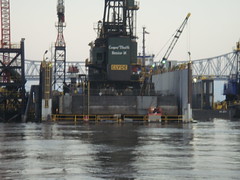
Time to kill the Jones Act? Probably not. If there's a specific problem with it, rewrite that part of the law. Otherwise, leave some fat in the system, because it's way too easy to 'lean' your way to disaster.
Anyway, if anyone has any specific experience with the Jones Act, I'd love to hear it.
UPDATE- Even RigZone calls the Jones Act a red herring, but they fault the USCG for not seizing control of the spill response (non-wellhead intervention) -side of the Macondo Blowout.
That's in part because of a specific exemption in the act that can allow for the use of foreign "oil spill response vessels," said H. Clayton Cook, a Washington attorney and expert on the Jones Act.
"That takes care of your skimmers and your oil spill vessels," he said.
Is the Jones Act, on balance, a good thing or not? Is it protectionist or is it a vital matter of national security? There's way too many facets of such a large law, but I'll talk about the main thrust of the Jones Act (maintaining domestic merchant marine and shipbuilding force).
The Merchant Marine Act of 1920 was authored by Wesley L. Jones (R- Washington) and has been nicknamed the Jones Act ever since. Note that the act has also been revised several times, with large changes made in 1970 and 2006. Here's the preamble to the Jones Act that more or less goes through its purpose and intent:
It is necessary for the national defense and for the proper growth of its foreign and domestic commerce that the United States shall have a merchant marine of the best equipped and most suitable types of vessels sufficient to carry the greater portion of its commerce and serve as a naval or military auxiliary in time of war or national emergency, ultimately to be owned and operated privately by citizens of the United States; and it is declared to be the policy of the United States to do whatever may be necessary to develop and encourage the maintenance of such a merchant marine, and, in so far as may not be inconsistent with the express provisions of this Act, the Secretary of Transportation shall, in the disposition of vessels and shipping property as hereinafter provided, in the making of rules and regulations, and in the administration of the shipping laws keep always in view this purpose and object as the primary end to be attained.
I've read a few things that have led me to the conclusion that the main thrust of the Jones Act is a good thing (although there's lots of subsets that could probably use a re-write). A couple more things to throw out there:
* All shipbuilding tends to be overbuilt. From Wikipedia's Shipbuilding page: "Historically, the industry has suffered from the absence of global rules and a tendency towards (state-supported) over-investment due to the fact that shipyards offer a wide range of technologies, employ a significant number of workers, and generate foreign currency income (as the shipbuilding market is both global and dollar-based)."
* The purpose of the Jones Act isn't about commerce, so citing examples how much it costs consumers isn't the point. If we let, say, China become THE global shipbuilding power and we have a war (or, more likely, a naval-based trade skirmish) it won't do any good to try and contract with Chinese shipyards to build vessels for the navy. Remember, by definition, the in-place warship building capability is overwhelmed.
* Big multinational companies are the ones pushing the hardest for killing the Jones Act, but lots of local shipbuilding companies are terrified of doing away with it. Aker Shipyards in Philadelphia has a page about the Jones Act. New Orleans City Business had a great article about the Jones Act a while ago where they interviewed reps from local shipyards and service companies who all stated they would be put out of business if foreign companies, with looser engineering, labor, and pollution laws were allowed to come in and compete on their home turf, meanwhile their countries have similar protectionist laws in place the prevent them from competing in foreign lands. The companies interviewed (going off memory; subscription required for City Biz site) included Bollinger, Houma Industries, Hornbeck, and Chouset Offshore.
Time to kill the Jones Act? Probably not. If there's a specific problem with it, rewrite that part of the law. Otherwise, leave some fat in the system, because it's way too easy to 'lean' your way to disaster.
Anyway, if anyone has any specific experience with the Jones Act, I'd love to hear it.
UPDATE- Even RigZone calls the Jones Act a red herring, but they fault the USCG for not seizing control of the spill response (non-wellhead intervention) -side of the Macondo Blowout.
Saturday, June 26, 2010
Great Macondo Blowout reporting from an unlikely source...
... A video game show:
Beats some of the stuff the big guys have done.
Beats some of the stuff the big guys have done.
Sunday, June 20, 2010
Yet more studying...
I've done lots of trips to Rue for coffee and studying.
Well, I've put in my application to LAPELS to take the P.E. Exam in October. I'm still awaiting word that the application is 100% complete. They go through the forms with a fine-tooth comb. They give you an extra month after the initial due date to make sure the application is complete.
Next, I'll have to register with NCEES. That's the national board that proctors the actual exam. They have a $150 fee. One thing I just realized is there has been a rule change. Now, when you register in July, you have to pick which subset for the afternoon you want to do on the exam in October. Sort of nuts, if you ask me. It used to be that you could mix and match problems based off what you felt confident or at least you could flip through the books and see what the problems looked like first. Not anymore.
As a MechE, I have 3 choices for the afternoon section:
HVAC
Machine Design
Thermofluids
Machine Design is probably the "easiest", but as I've worked problems, I've found it's entirely too easy to make mistakes on those types of problems. The P.E. Exam is now 100% multiple choice with no credit for just missing a sign or something like that.
HVAC is surprisingly quick. I like that I can get an answer (right or wrong) in a reasonable amount of time for just about any question.
Thermofluids is the closest to what I do at work. It's probably what I'm going to take on the exam, primarily because of my familiarity with it. The disadvantage is that there can be some extremely complicated 15-state thermodynamics problems and even the easiest heat transfer problems take forever to do.
I have to pick what I do in October in July.
-------------
More P.E. news:
Professional engineers provide the needed link between industry and public welfare
NCEES response to the Deepwater Horizon incident. Note that Mark Hafle, BP's engineer that designed the well, is not a P.E.
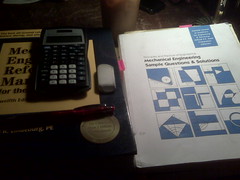
Well, I've put in my application to LAPELS to take the P.E. Exam in October. I'm still awaiting word that the application is 100% complete. They go through the forms with a fine-tooth comb. They give you an extra month after the initial due date to make sure the application is complete.
Next, I'll have to register with NCEES. That's the national board that proctors the actual exam. They have a $150 fee. One thing I just realized is there has been a rule change. Now, when you register in July, you have to pick which subset for the afternoon you want to do on the exam in October. Sort of nuts, if you ask me. It used to be that you could mix and match problems based off what you felt confident or at least you could flip through the books and see what the problems looked like first. Not anymore.
As a MechE, I have 3 choices for the afternoon section:
HVAC
Machine Design
Thermofluids
Machine Design is probably the "easiest", but as I've worked problems, I've found it's entirely too easy to make mistakes on those types of problems. The P.E. Exam is now 100% multiple choice with no credit for just missing a sign or something like that.
HVAC is surprisingly quick. I like that I can get an answer (right or wrong) in a reasonable amount of time for just about any question.
Thermofluids is the closest to what I do at work. It's probably what I'm going to take on the exam, primarily because of my familiarity with it. The disadvantage is that there can be some extremely complicated 15-state thermodynamics problems and even the easiest heat transfer problems take forever to do.
I have to pick what I do in October in July.
-------------
More P.E. news:
Professional engineers provide the needed link between industry and public welfare
NCEES response to the Deepwater Horizon incident. Note that Mark Hafle, BP's engineer that designed the well, is not a P.E.
Wednesday, June 16, 2010
Tony Hayward Goes Before Congress Tomorrow
Good luck. You're going to need it.

Don't forget to come prepared.
Congress' letter to Tony Hayward. Well worth a read for all the details.
A couple more things to check out:
David Hammer has another fantastic article in today's Times-Pic. He's been a master of presenting the facts in an accurate, understandable way. I can't tell you how frustrated I get when I see some talking head on TV talking about how the well was in water that's "5,000 cubic feet deep" {facepalm}. Just about every article Hammer has cranked out has been great.
GQ Magazine: Boom. Checking in on a few of the lives effected by the explosion, including checking up on the families of the 11. Worth a read, especially the end.
Also, keep reading The Oil Drum for the most accurate, objective reporting on the spill.
Friday, June 11, 2010
4 Horsemen Approach South Louisiana?
The demise of South Louisiana has been forecast many times before, but we're now looking at some bleak times.
There is of course the Gusher in the Gulf that just goes on and on, ruining the environment and putting the fisherman out of business. P&J's is hit and almost every single fishing ground in the state will eventually get whacked. So many people in South Louisiana are employed bringing nature's bounty to shore.
There's also the "Economic Nightmare" of the Drilling Moratorium. Thousands of Louisianians are employed working offshore or supporting those offshore (including yours truly) and the rig count is one of the most important factors in the health of the industry. Artificially setting it to zero will have consequences.
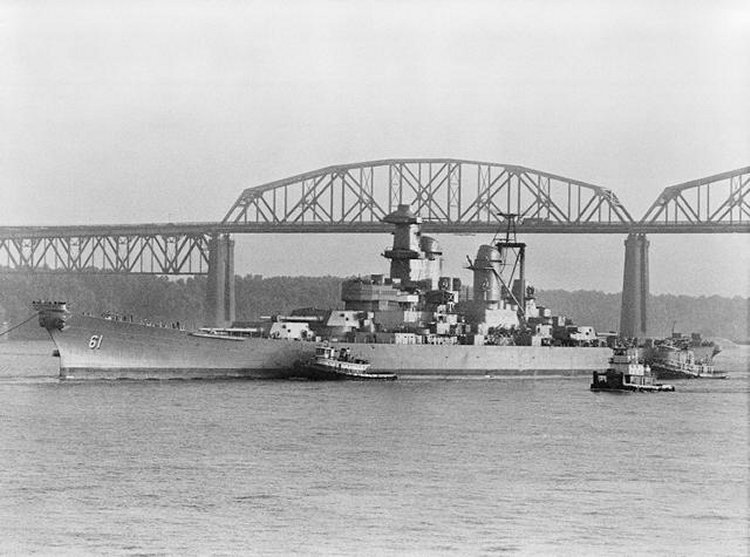
Another factor to consider: Avondale Shipyards is looking at tough times. It was once the largest private employer in the state. As recently as the 90's, it was still the 3rd largest employer in the state. Candice's grandfather was one of the many throughout the tiny Acadiana towns to take the bus to the yard. Business is slowing dramatically and while they're OK for now, there's not much on the horizon to give them hope. From what I understand, it's a mixture of factors. First off, Louisiana doesn't have the congressional heft it used to. Landrieu has some swing, but the rest are pathetic and it's a far cry from the days of Breaux, Livingston, Boggs, and even $Bill. Avondale is also a bit of an old yard. It's main advantage is that it's got access to deep draft waterways (the Mississippi has 3, 100'-deep channels all the way up to about Baton Rouge). Northrup-Grumman, which also owns Pascagula, is looking to shift workers to Mississippi, where they have plenty of work for the foreseeable future and a much more modern yard. Northrup-Grumman may even completely close Avondale. Most of the newer US Navy ships tend to be shallower draft, anyway (most of the capital ships started under the 600-ship navy program are still in service with less of a need for replacements at the moment). Here's a nice photo for old-time's sake: USS Iowa passes under the Huey P in 1982.
Finally, Michoud only has a few more E.T.'s left to ship and is facing big job losses.
Oh well, at least there'll be the lawyers suing BP to support the economy (unless of course, the trial gets sent to Houston)...
UPDATE- Avondale Shipyards to close, according to Northrup Grumman.
Wednesday, June 9, 2010
Book Review: Normal Accidents

Normal Accidents: Living with High-Risk Technologies
Recently, while talking about the Deepwater Horizon, someone recommended "Normal Accidents" by Charles Perrow. It's all about Normal Accident Theory [PDF]. The book is filled with all sorts of illustrative examples from a variety of industries (nuclear power, marine transport, aviation, etc.).
There's a huge database of incidents and near-misses. Here's an example from Fix the Pumps on why near misses are important. The most ground breaking part of the book is when he talks about "non-collision course collisions" where two vessels with radar in good weather will come close to each other, but are well away from colliding. Both bridge crews react poorly and the vessels collide, sometimes with deadly consequences (one example was from the Mississippi River near New Orleans - NTSB Report [PDF]).
He also constantly harps on the fact that "operator error", while a constant scapegoat, is actually usually a factor of design flaws or production pressure or something else. Operators get blamed for entirely too much, in Dr. Perrow's opinion. Also, lots of "safety systems" can serve to actually make a complex system more dangerous. Remember, Chernobyl was testing a new safety system the day it blew up. More does not necessarily mean better. If it just adds to the complexity or it requires too much maintenance or it leads to nuisance alarms that cause the operators to miss the real flaw, it's bad. Getting the RIGHT safety system is an important balancing act.
The book has its drawbacks, though. Dr. Perrow is a sociologist, so he gets on some things that, if you have a science or engineering background, you just shake your head at. For example, this edition was last updated in 1999 and he recommends buying a generator to prepare for Y2K. Oops. He also occasionally lets his personal political views push for conclusions beyond strictly what the data (at least as he's presented) supports (ex.- he advocates completely abandoning nuclear power).
There's a lot more to the book, but suffice to say, the book made me think. In the future, I think it will be good for my development as an engineer to ensure that I read at least one engineering disaster book per year.
Monday, June 7, 2010
Monday, May 31, 2010
Sunday, May 23, 2010
4 Years of Engineering
As of yesterday, I've worked as an engineer for 4 years. I graduated on a Saturday, got a job offer Monday, started the Monday after that.
I'm now eligible to take the P.E. Exam. Most states require 5 years of experience before you can take the Principles and Practice in Engineering Exam. Louisiana only requires 4 (and up until this year, you could take it with 3 years, 9 months experience and the time that lapsed between applying and taking the exam an getting the results would take care of the 4 years experience).
The application is due on June 1st and I have everything done. I was just waiting for the official 4 year mark to appear on my experience record, that way there could be no hiccups. You're given an extra month to finalize the application in case of an error or an incomplete application.
I'll take the exam in late October. I've been studying for November and there are times where I'd just prefer to go to the bar and watch baseball. I've gotten pretty frustrated sometimes because, at least for the mechanical exam, there is SO MUCH MATERIAL on the exam.
I've been pretty fortunate in that I've been switched around and gotten lots of experience in different areas; I haven't been pigeonholed doing just one thing. Despite this, I've had nowhere near enough exposure to everything on the exam. The three main areas on the exam are Machine Design, Thermofluids, and HVAC. I've never done any HVAC work and have been teaching that to myself.
The only thing that I've personally worked on enough where I feel like I could take the exam without studying is pumps and piping. Everything else, I have to study. I wonder how hard mechanical engineering is compared to some of the hyper-specific exams like nuclear or petroleum. It's not enough just to know the subject, but you also have to be able to work the problems quickly and efficiently without a computer. So far, I've worked out HVAC problems so quickly that, despite the fact that I've never done that for my job, I'm leaning towards taking that as the "in-depth" portion of the exam.
I'll be making lots of trips to Rue this summer to study...

I'm now eligible to take the P.E. Exam. Most states require 5 years of experience before you can take the Principles and Practice in Engineering Exam. Louisiana only requires 4 (and up until this year, you could take it with 3 years, 9 months experience and the time that lapsed between applying and taking the exam an getting the results would take care of the 4 years experience).
The application is due on June 1st and I have everything done. I was just waiting for the official 4 year mark to appear on my experience record, that way there could be no hiccups. You're given an extra month to finalize the application in case of an error or an incomplete application.
I'll take the exam in late October. I've been studying for November and there are times where I'd just prefer to go to the bar and watch baseball. I've gotten pretty frustrated sometimes because, at least for the mechanical exam, there is SO MUCH MATERIAL on the exam.
I've been pretty fortunate in that I've been switched around and gotten lots of experience in different areas; I haven't been pigeonholed doing just one thing. Despite this, I've had nowhere near enough exposure to everything on the exam. The three main areas on the exam are Machine Design, Thermofluids, and HVAC. I've never done any HVAC work and have been teaching that to myself.
The only thing that I've personally worked on enough where I feel like I could take the exam without studying is pumps and piping. Everything else, I have to study. I wonder how hard mechanical engineering is compared to some of the hyper-specific exams like nuclear or petroleum. It's not enough just to know the subject, but you also have to be able to work the problems quickly and efficiently without a computer. So far, I've worked out HVAC problems so quickly that, despite the fact that I've never done that for my job, I'm leaning towards taking that as the "in-depth" portion of the exam.
I'll be making lots of trips to Rue this summer to study...
Tuesday, May 18, 2010
Deepwater Horizon / Macondo Blowout - Links
I've been a little hesitant to post anything about the Deepwater Horizon/Macondo Blowout. I tend to work on things from the Christmas tree up, but here are a few things to peruse for starters:
The Oil Drum has had some fantastic coverage of the blowout. Probably the best single website when it comes to clear, concise, timely, technically accurate coverage (although RigZone has been pretty good, too).
P.E. writes about about working on rigs and pulls from his vast experience to offer his thoughts.
In the end, the document that should be the most read is the Coast Guard/MMS Board of Inquiry findings. Here's the one for the Ocean Ranger [PDF]. While we can make some very good hypothesis about the technical causes of the blowout and what could be done better to protect the environment and personnel, remember to keep an open mind until all the data is in, especially when the Blowout Preventer is pulled and carefully analyzed on the surface.
60 Minutes. The 60 Minutes piece on the Deepwater Horizon is well worth a watch. It fills in a few holes, but remember it's just a few pieces in the giant puzzle of what went wrong (and for a disaster of this magnitude, there's many, overlapping modes of failure).
Here's a couple of my old posts worth a read, too:
Engineering Disasters: The Demise of the Ocean Ranger
The Offshore Imperative
________________
UPDATE- MMS engineer warned of the danger of deepwater blowouts in 2009. Note that the odds of a deepwater blowout were calculated to be roughly 1 in 400 chance; that's about the same as a Category 5 hurricane destroying our crappy 100-year-level storm protection...
Oil Reaches Shore - Boston.com's Big Picture
Subscribe to:
Posts (Atom)